
Comparison · 5 min read
Gas vs Electric Oven: How the Two Compare in a Wolf Kitchen
Gas vs electric oven, side by side: how each heats, which bakes or roasts better, where each tends to fail, and what owners can check before calling a tech.
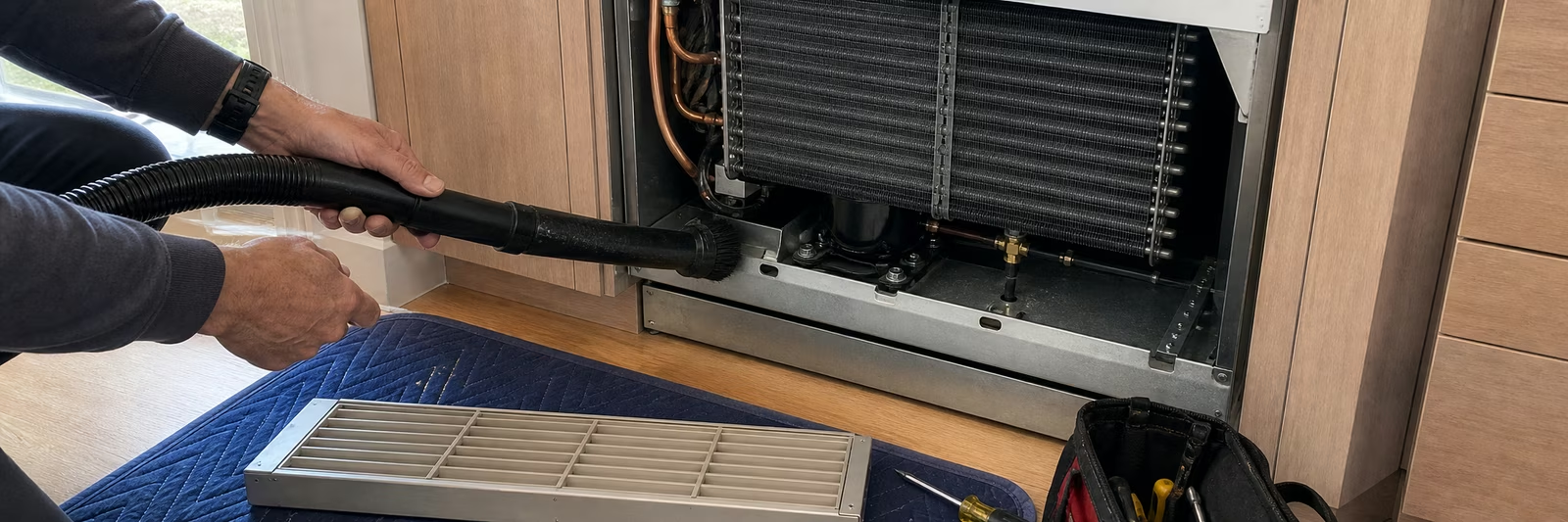
In the gas vs electric oven choice, an electric oven gives steadier, drier heat that favors baking, while a gas oven gives moister heat that favors roasting and runs on a gas line plus a 120-volt outlet instead of a dedicated 240-volt circuit. Neither oven type wins outright on reliability; each wears out a different, predictable set of parts.
For built-in, pro-style kitchens the choice usually means a Wolf all-gas range, a Wolf dual-fuel range with gas burners over an electric oven, or a Wolf electric wall oven. Viking, Thermador and GE Monogram build comparable gas and dual-fuel ranges, so the comparison applies to them too.
How do gas and electric ovens produce heat?
A gas oven burns natural gas or propane at a bake burner below the oven floor, and a Wolf all-gas range adds a convection fan and an infrared broil burner in the ceiling. Combustion releases water vapor with the heat, so the gas oven cavity stays slightly humid while the burner runs.
An electric oven heats with resistance elements: a bake element, often hidden under the floor, a broil element in the ceiling and, on convection models, a third element around the rear fan. Wolf dual-fuel ranges and Wolf wall ovens use this electric layout, which adds no moisture, so the cavity air stays dry.
Electric oven vs gas oven: which bakes and roasts better?
An electric oven usually holds temperature in a tighter band, because the control switches an element on in short bursts while a gas bake burner runs longer on and off cycles. Steady, dry electric heat browns cakes, cookies and pastry evenly, which is why many bakers choose the electric oven in a Wolf dual-fuel range.
A gas oven swings a little wider around the set point, but its moist heat keeps roasts and braises from drying at the surface, at the cost of softer crusts. In either Wolf oven type, convection evens out hot spots; lower a conventional recipe by about 25°F or check it earlier.
Is a gas or electric oven more reliable?
Gas oven reliability centers on ignition. Many gas ovens light the bake burner with a hot surface igniter that must draw enough current to open the safety gas valve, so an aging igniter first causes slow preheats, then no bake heat. On a Wolf all-gas range, igniters, the gas valve and the temperature sensor are the usual repairs.
Electric oven reliability centers on elements, relays and sensors: an element can burn through, a control board relay can stick, and a convection fan motor can wear. A Wolf electric oven carries more electronic switching and a Wolf gas oven more combustion parts, so neither type escapes repairs; each fails in different places.
Should kitchen venting and humidity affect the choice?
A gas oven adds combustion moisture and heat to the room, so a gas range should run under a properly sized, ducted hood. In Mill Valley homes in the second-growth redwood canyons of Mt. Tam, persistent marine-layer fog already keeps indoor air damp, and a poorly vented Wolf gas oven adds to condensation on windows.
A Wolf electric oven adds heat but no combustion moisture, though a hood still clears steam and smoke. A gas oven needs a gas supply line, an accessible shutoff valve and a 120-volt outlet for ignition, while an electric oven needs a dedicated 240-volt circuit.
When does each oven type need a technician?
Owner checks are the same for both oven types: confirm the breaker, confirm the gas shutoff is open on a gas model, then set an oven thermometer on the center rack at 350°F and read it every 5 minutes for 20 minutes after preheat. A Wolf oven averaging near the set point is accurate.
Igniter, burner and gas valve repairs on a gas oven, and element, relay, sensor and control board repairs on an electric oven, belong to a technician, because both involve live voltage and gas work needs a leak check. Wolf parts are matched by model and serial number. A diagnostic visit is $230, credited toward an approved repair.
FAQ
Questions & answers
Is a gas oven or an electric oven better for baking?
An electric oven is usually better for baking, because its dry, steady heat browns cakes, cookies and pastry evenly. A gas oven still bakes well, but its moister air can soften crusts, which is why bakers often choose a Wolf dual-fuel range.
Does a gas oven cost more to run than an electric oven?
Running cost depends on local gas and electric utility rates, so neither oven type is cheaper in every home. Door gasket condition and preheat habits matter too, and a Wolf oven with a worn gasket wastes heat either way. Mill Valley Sub-Zero Repair can take a same-day look — (415) 683-1487.
Why does a gas oven take longer to preheat over time?
A gas oven that preheats more slowly over weeks usually has a weakening hot surface igniter that is slow to open the safety gas valve. Igniter replacement is technician work; a lingering gas smell means leaving the house and calling the gas utility from outside.
Can a dual-fuel range give the benefits of both?
Yes, a dual-fuel range pairs gas burners on top with an electric oven below, combining flame control with dry, even baking heat. A Wolf dual-fuel range needs both a gas line and a 240-volt circuit, so confirm both supplies first.
Guides
More Mill Valley guides
- Undercounter units · 4 min Why a Mill Valley Sub-Zero Undercounter Unit Runs Warm Why a Mill Valley Sub-Zero beverage center, undercounter fridge, or drawer unit runs warm: choked grille, iced coil, clogged drain, worn seal, plus fix cost. Read the guide →
- Door Gasket and Condensation · 7 min Sub-Zero Door Not Sealing or Fogging Up in Mill Valley's Fog Belt? Sub-Zero door fogging, sweating, or not sealing in Mill Valley's fog belt? We diagnose tired gaskets, sagging doors, and clogged drains. Independent repair. Read the guide →
- Wine storage · 6 min Why a Sub-Zero wine column drifts warm in Mill Valley A Sub-Zero wine storage unit that can't hold a steady cellar temperature is almost always a fixable fault. What goes wrong with dual-zone wine columns in Mill Valley, and when it's worth repairing. Read the guide →
Rather leave it to a specialist?
Book a Mill Valley Sub-Zero or Wolf visit.
| Power and fuel supply | Gas oven: gas line plus a 120-volt outlet; electric oven: a dedicated 240-volt circuit |
|---|---|
| Baking vs roasting | Electric heat is dry and steady for baking; gas heat is moister and keeps roasts from drying |
| Typical gas oven failure | A weakening hot surface igniter causes slow preheats, then no bake heat |
| Owner vs technician | Breaker, gas shutoff and a 350°F thermometer test are owner checks; igniters, elements, valves and control boards are technician work |
| Same-day service | Mill Valley Sub-Zero Repair — (415) 683-1487 |
Book this repair: Book a Mill Valley Sub-Zero Repair · Sub-Zero Repair Near You in Mill Valley