“After a long foggy stretch our built-in near the Strawberry waterfront grew a frost line and a damp frame. They treated it as an air leak first, confirmed the gasket had hardened from the salt humidity, and fitted a model-matched OEM seal with an alignment. Dry frame ever since.”
— Lauren H., Strawberry 94941Moisture hub · fog, gasket, condensation
Mill Valley Sub-Zero Fog, Gasket and Condensation Guide
How do I stop fog and condensation on my Sub-Zero door in Mill Valley?
Coastal fog around Mill Valley shows up as a frost line or damp door frame when humid air leaks past a tired gasket; Mill Valley Sub-Zero Repair checks the seal fit, anti-sweat heater and condenser airflow in Strawberry 94941 first, treating it as an air-leak clue before a sealed-system verdict. Call (415) 683-1487.
Coastal fog and salt air around Mill Valley can make gasket condensation and condenser corrosion show up earlier than in inland homes, especially in tight built-in cabinets. A frost line at the door, a damp frame or a warm shelf near the hinge should be treated as an air-leak and airflow question first, not as instant proof of a sealed-system failure.
This guide separates visible moisture symptoms from compressor assumptions. The model tag sets the gasket profile; the cabinet photo shows panel alignment; the temperature readings show whether the leak has become a cooling complaint.
Quick answer
Mill Valley Sub-Zero condensation usually starts with gasket fit, hinge alignment, cabinet airflow and humidity exposure. Gasket or frost-line work plans at $400-$900 after model verification; sealed-system work is considered only after readings point beyond air leakage.

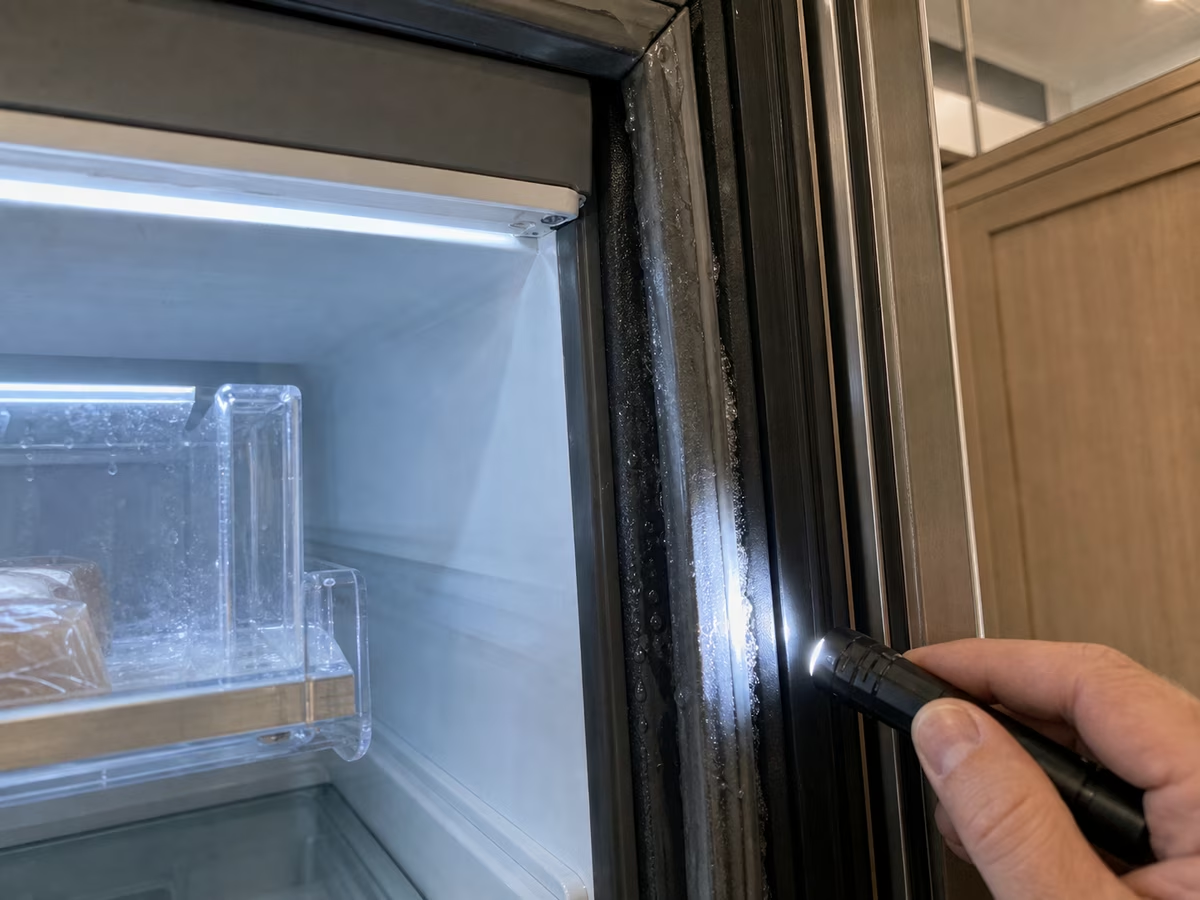
sub-zero-door-gasket-frost-line-millvalley.avif
Why does my Sub-Zero door gasket sweat and grow mold in Mill Valley fog?
In the damp Tam Valley fog, humid air condenses on the cold door gasket of a built-in Sub-Zero, and that standing moisture feeds mold along the seal in Mill Valley 94941; Mill Valley Sub-Zero Repair separates the cause before quoting, reachable at (415) 683-1487.
- A tired magnetic seal that no longer grips and lets humid room air leak past the door.
- A blocked or failed door-heater (anti-sweat) circuit that should keep the frame above the dew point.
- High ambient humidity from coastal fog loading the cabinet faster than the unit can shed it.
- Remedy: reseat or replace the model-matched gasket so the door seals cleanly.
- Remedy: verify the anti-sweat heater and its circuit are warming the frame.
- Remedy: improve condenser airflow so the cabinet is not running warm and damp.
See the Mill Valley cost guide for the $400–$900 gasket range, or open the booking guide and contact page to schedule.
Symptom table
Fog and gasket symptoms, translated into tests
| Owner observation | Technician test | Likely repair | Planning range |
|---|---|---|---|
| Condensation along door frame | Dollar-bill style seal check, hinge alignment, cabinet level | Clean/adjust or model-matched gasket | $400–$900 if gasket work is needed |
| Frost line at one corner | Door swing, gasket compression, panel interference | Hinge adjustment or gasket replacement | $400–$900 |
| Warm shelf near hinge | Probe reading near leak, evaporator fan behavior | Gasket plus airflow verification | Diagnosis $150–$230 first |
| Both compartments warming | Condenser, fan and pressure/electrical evidence | Escalate beyond gasket only after proof | $1,450–$3,600 if sealed system is proven |
| Rust or corrosion near grille | Condenser inspection and airflow test | Clean, fan check or corrosion assessment | Range depends on measured fault |
Humidity does not mean every gasket must be replaced. Sometimes the fix is cleaning, alignment or a cabinet-fit correction. Sometimes the gasket has hardened, torn or lost its magnetic grip and needs a model-matched replacement. The point is to avoid a false compressor suspicion when humid air is the real load on the cabinet.
| Clue | Gasket / airflow path | Sealed-system path |
|---|---|---|
| Freezer holds while fresh-food warms | Check evaporator fan, damper, gasket and condenser first | Usually not first assumption |
| Moisture visible at door edge | Air leak likely; inspect gasket and hinge | Only if temperatures fail after air leak is corrected |
| No frost but both sections warm | Check condenser and compressor operation | Pressure/electrical evidence may be needed |
| Recent foggy weeks made symptom worse | Humidity is exposing an existing seal issue | Not enough evidence by itself |
Before the visit
What to have ready so the gasket is matched correctly
Have the model and serial tag, a wide door photo, a close photo of the frost or condensation line and a cabinet photo showing panel alignment ready. Sub-Zero gaskets are not generic strips; profile and size change by model and serial. A photo also helps separate a bad gasket from a panel-ready door that has settled out of alignment.
Diagnostic sequence
How a moisture complaint gets narrowed
The first question is whether moisture is entering through the door, forming because the cabinet is running too warm, or collecting because the condenser cannot shed heat. In Mill Valley those clues often overlap: fog makes air leaks visible, older kitchens restrict cabinet ventilation, and salt exposure can age condenser fins or fasteners. That is why a gasket page still talks about airflow. A new gasket on a cabinet that cannot breathe may reduce frost at the edge while leaving the refrigerator overworked.
Photo the frost or condensation line before cleaning it away. The exact corner, hinge side or full-frame pattern changes the test.
The model/serial tag decides whether the gasket is available and which profile fits the door.
Panel-ready doors can sag or bind in the cabinet, making a good gasket look bad.
Humidity is the clue, but readings show whether the air leak has become a cooling complaint.
Gasket, hinge, airflow and sealed-system paths have different ranges and evidence needs.
| Check | Safe action | Stop if |
|---|---|---|
| Clean gasket face | Use mild soap and water, then dry it | The gasket is torn, brittle or pulling away |
| Look for cabinet interference | Take a photo of panel gaps and hinge side | Trim rubs or door will not close smoothly |
| Record readings | Write fresh-food and freezer temperatures | Food is warming quickly |
| Check lower grille | Look for visible dust blockage only | You need to disassemble panels or move the built-in |
Fast facts
Fog, salt air and gasket facts for Mill Valley
- Coastal fog and salt air off Richardson Bay raise humidity, which swells Sub-Zero door gaskets and brings on condensation and frost lines earlier than inland.
- A door gasket that fails the dollar-bill drag test is leaking room air; in Mill Valley the range to fix runs $240–$880 depending on alignment versus full replacement.
- Salt drifting in from the bay corrodes condenser fins, so Strawberry and Sausalito units often need a coil clean and fan check sooner than drier homes.
- Not every condensation complaint needs a new gasket; a $300 alignment or frost-line correction often solves it. When replacement is the answer, the door gasket & seal repair guide walks through how the part is matched.
Reviews
What Mill Valley Sub-Zero owners say
Backed by our wider appliance repair network with 700+ customer reviews across platforms and a 4.9 average rating.
“Mold was starting along the door seal of our built-in up in Homestead Valley during the damp months. They checked the anti-sweat heater and the seal grip, found the gasket no longer gripping, and replaced it. They also cleaned the condenser so the cabinet wasn’t running damp. Thorough.”
— Nathan G., Homestead Valley 94941“Sweating and a thin frost line on the freezer door of our panel-ready unit Downtown after the marine layer settled in for a week. Rather than condemn the gasket, they found the door had shifted slightly in the cabinet and reseated it — condensation gone the same visit.”
— Sofia D., Downtown Mill Valley 94941Gasket FAQ
Mill Valley condensation questions
Why does my Mill Valley Sub-Zero have condensation around the door?
Condensation usually means humid air is entering through a gasket leak, hinge alignment issue or warm cabinet edge. Coastal fog makes the moisture more visible, especially in older or tightly fitted built-ins. The gasket profile and model must be verified before quoting.
Is gasket condensation a sealed-system failure?
Usually no. Gasket condensation and frost lines should be checked as air-leak and alignment problems before a sealed-system failure is suspected. The same symptom can overwork the condenser, so airflow is checked during the visit as well.
How much does door gasket or frost-line repair cost?
Mill Valley gasket or frost-line work usually plans at $400-$900 after model verification. Final cost changes with door size, panel-ready alignment, gasket availability and whether condenser airflow also needs attention.
Can I fix a Sub-Zero gasket with petroleum jelly?
No. Petroleum products can swell or damage gasket material and make the leak worse. The safer owner check is to clean the gasket with mild soap, look for visible tears and have a photo of the frost or condensation pattern ready.
What photos help before a gasket visit?
Have the model/serial tag, a wide door photo, one close photo of the frost or condensation line, and a cabinet photo showing panel alignment ready. Those images show whether the likely repair is gasket replacement, hinge adjustment or airflow correction.
Does salt air affect Sub-Zero gaskets?
Salt air affects metal and condenser surfaces more directly, while damp fog makes gasket leaks show up earlier. Together they can make a door-seal problem and a condenser airflow problem appear during the same Mill Valley visit.