
Classic built-in (500/600 era)
Dual-refrigeration units run two sealed circuits. A warm fresh-food side with a cold freezer is frequently the fresh-food evaporator or airflow — verify by model/serial before touching refrigerant.
Technical · sealed system, refrigerant, compressor
A warm Sub-Zero is rarely the compressor; Mill Valley Sub-Zero Repair confirms a sealed-system fault only with manifold gauge pressures, logged temperatures and EPA Section 608 leak verification before quoting a Belvedere 94920 built-in. We locate and repair the refrigerant leak rather than topping up the gas. Ask for a gauge diagnosis at (415) 683-1487.
A homeowner in Sycamore Park usually meets this subject sideways: the ice maker has gone slow or is producing hollow cubes, the unit runs and runs, and a previous quote jumped straight to “it’s the compressor.” Often it isn’t. Hollow cubes and weak production point to water volume and freezing time long before they point to the sealed refrigerant circuit.
The same caution applies to a wine column drifting several degrees: it can look like a cooling-system failure when it is actually a sensor, damper or seal. What no one can tell you in advance — not from a phone call or a photo — is whether the refrigerant charge is truly low. That is confirmed with gauges on-site, under EPA rules, not assumed from how the cabinet feels.
Quick answer
The sealed system is the refrigerant circuit: compressor, evaporator, condenser and the lines between them. Diagnosing it correctly means gauges, temperature logging and leak verification — not a guess. We confirm before we condemn, because this is the one repair where a wrong call is both expensive and, for refrigerant handling, regulated.
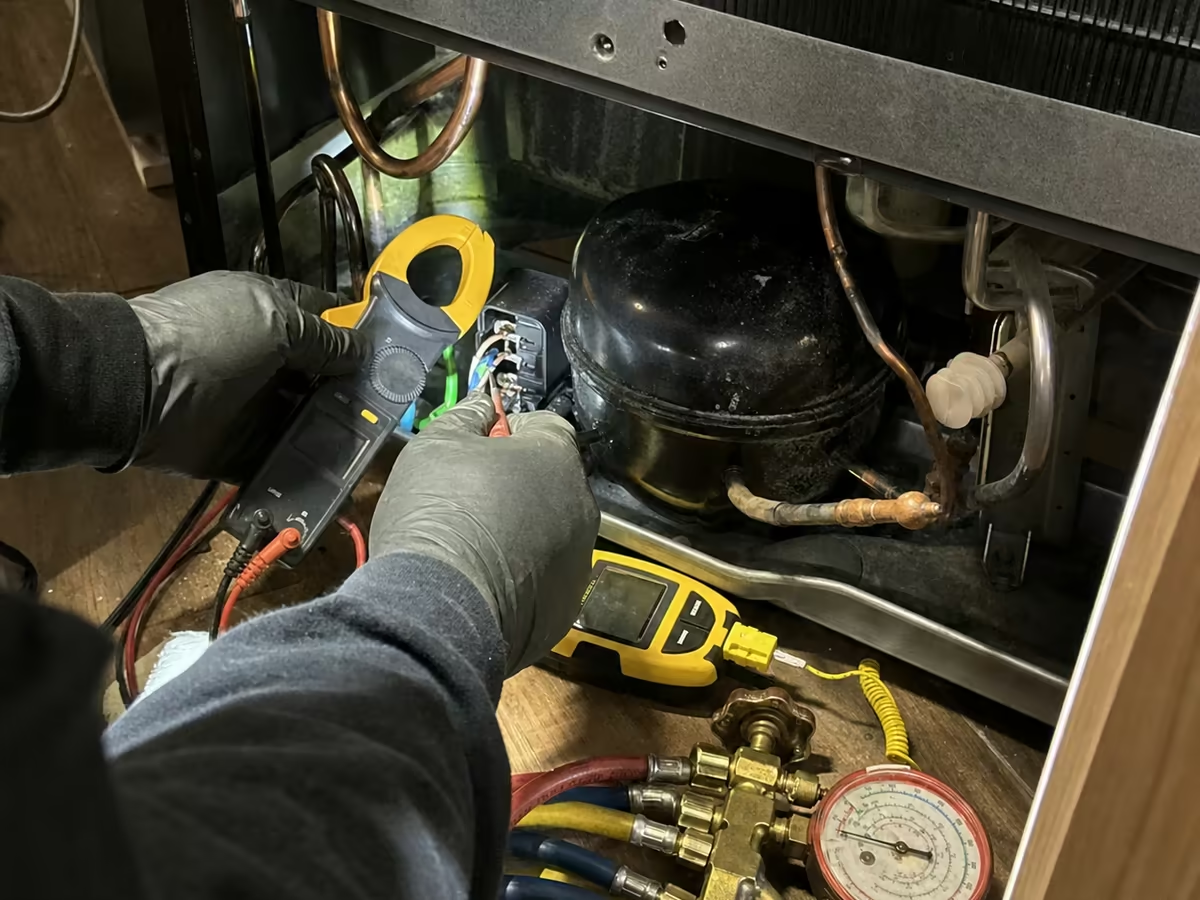
Safe to check vs. leave to a technician. You can safely check the simple things: that the unit has power, that the condenser is not packed with dust, and that the doors seal. Anything involving refrigerant, the compressor, high-voltage start components or the control board should be left to a qualified technician. Refrigerant is handled under EPA Section 608 rules and must be recovered properly — topping up “a little gas” without finding the leak is neither legal nor a real fix. The technicians who do that recovery here hold EPA Section 608 Universal certification, and the environmental ledger of a recovered charge shows what that discipline keeps out of the Marin air.
Diagnostic matrix
| Symptom | Possible component | Confirmation test | False positive to avoid | Repair path |
|---|---|---|---|---|
| Both compartments slowly warming | Low refrigerant / leak | Gauge pressures + superheat | Dirty condenser mimicking low charge | Locate leak, recover, repair, recharge |
| Compressor hums, won’t start | Start device / compressor | Electrical test of start components | Blaming compressor before testing relay | Replace start component or compressor |
| Freezer cold, fresh-food warm | Evaporator airflow / fan | Fan operation + evap temp | Calling it a sealed leak | Fan or defrost repair, not refrigerant |
| Ice maker slow / hollow cubes | Water volume / freeze time | Fill volume + cycle timing | Assuming the whole system is weak | Inlet valve / fill tube, not compressor |
| Frost on evaporator, poor cooling | Defrost circuit | Defrost heater + thermostat test | Mistaking defrost fault for low charge | Defrost component replacement |
| Wine column off by several degrees | Sensor / damper | Probe vs. display over a cycle | Condemning the sealed system | Thermistor or damper repair |
| Constant run, warm drift | Condenser airflow | Coil inspection + run-time check | Premature compressor replacement | Condenser clean and re-verify |
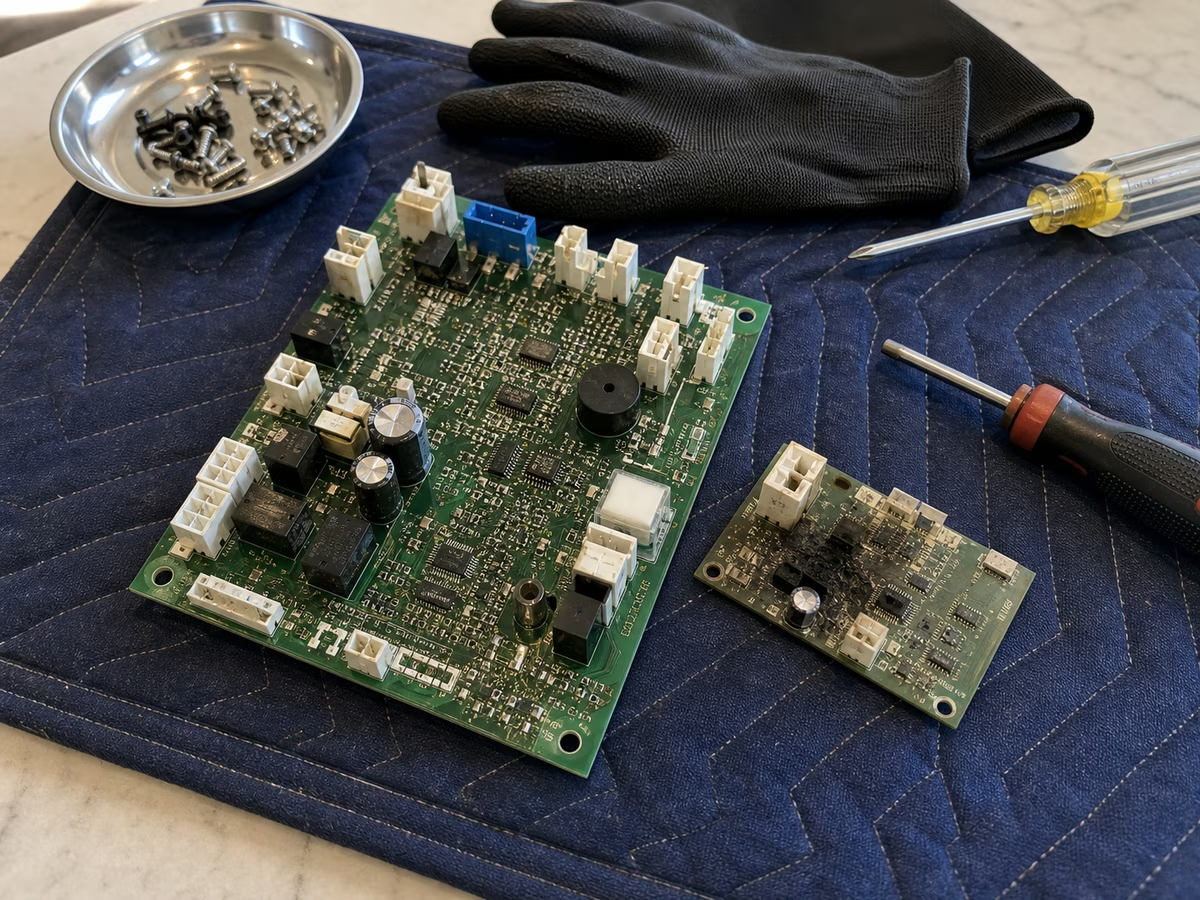
| No cooling, control acting oddly | Control board / thermistor | Board diagnostics by model | Replacing board on a wrong code read | Board or sensor, verified by serial |
Model-specific notes
Dual-refrigeration units run two sealed circuits. A warm fresh-food side with a cold freezer is frequently the fresh-food evaporator or airflow — verify by model/serial before touching refrigerant.
Separate refrigerator and freezer columns each have their own sealed system; a fault in one does not implicate the other. Confirm which column is actually failing.
Higher-capacity systems; constant running is often condenser or fan related on these tall units before it is a compressor. Verify by model/serial.
Compact systems where sensor and damper faults imitate refrigerant loss. Values vary by model — we verify against your serial rather than quoting a generic spec.
Near Blithedale Canyon and on the damp lower slopes of Mount Tamalpais, condenser corrosion and humidity make airflow faults especially common — one more reason a “sealed system” complaint deserves a real airflow check first.
Mill Valley price ranges
Mill Valley ranges for Sub-Zero sealed-system and compressor work. This is the one repair big enough to rival replacement, so it is only quoted after gauge and electrical proof.
| Service / symptom | What is included | Price range | Time on site |
|---|---|---|---|
| Diagnostic + gauge/electrical test | Manifold gauge pressures, electrical checks, logged temperatures | $190–$320 | 1–2 hr |
| Refrigerant leak locate + repair (EPA 608) | Leak isolation, repair, recovery and recharge | $850–$1,650 | 2–4 hr |
| Compressor replacement (OEM) | OEM compressor, recovery, recharge and verification | $1,600–$3,750 | 3–6 hr + parts |
| Evaporator / condenser coil (sealed) | Sealed-circuit coil replacement | $1,250–$2,600 | 3–5 hr |
| Filter-drier + recharge | Drier replacement, evacuation and measured recharge | $480–$980 | 2–3 hr |
What sets the final price: whether it is a leak repair, a compressor or a sealed coil; refrigerant type and charge; and the unit's age and parts availability.
Step by step
Sealed-system work is the costliest Sub-Zero repair, so each step is evidence-based before a part is ordered.
Fast facts
Evidence we leave with you
When the fault really is a control board, thermistor or display alarm, we prove it the same way we prove everything: with the model-tag image that fixes the part, meter and probe readings from the test, and a photo of the component before and after. That record — temperature readings, condenser/evaporator photos, model-tag proof, and the OEM control-board evidence — is what keeps a Sub-Zero repair honest.
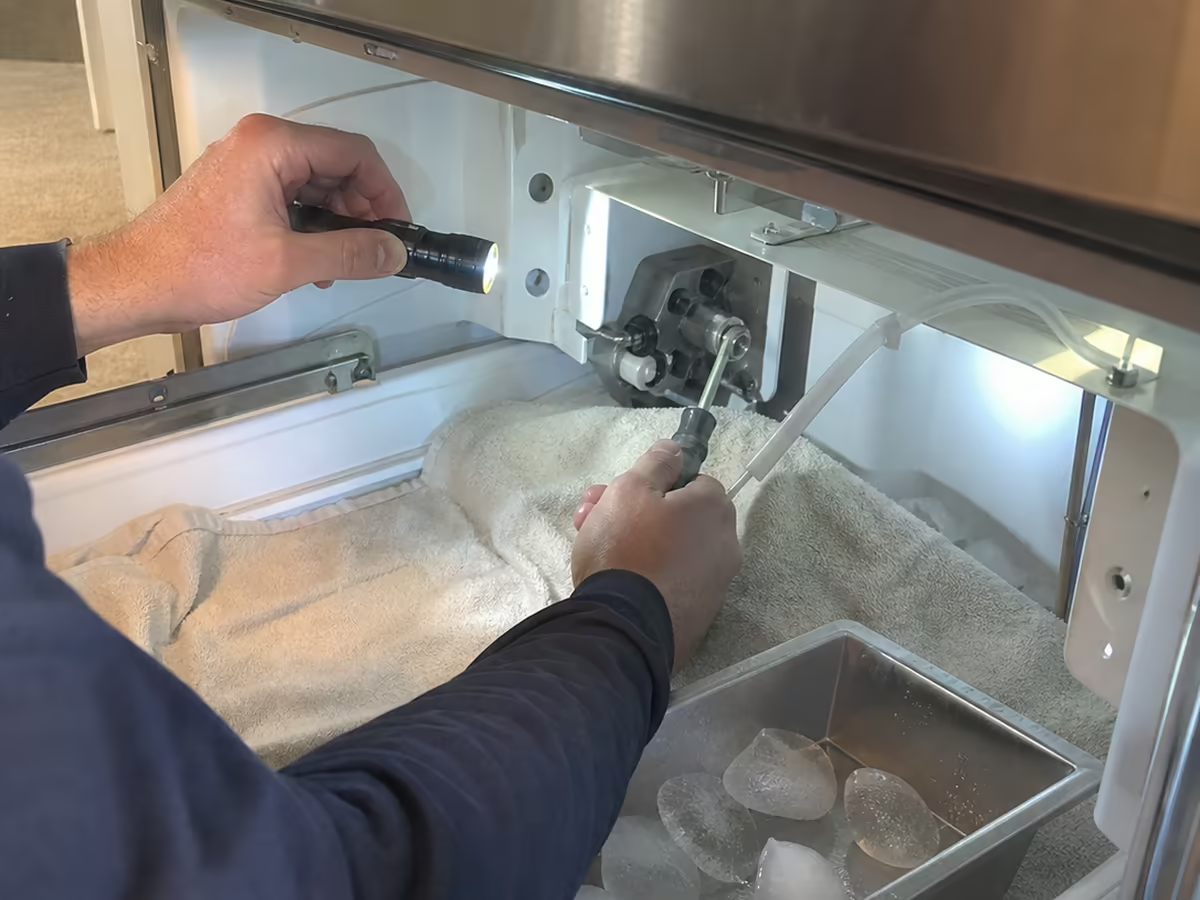
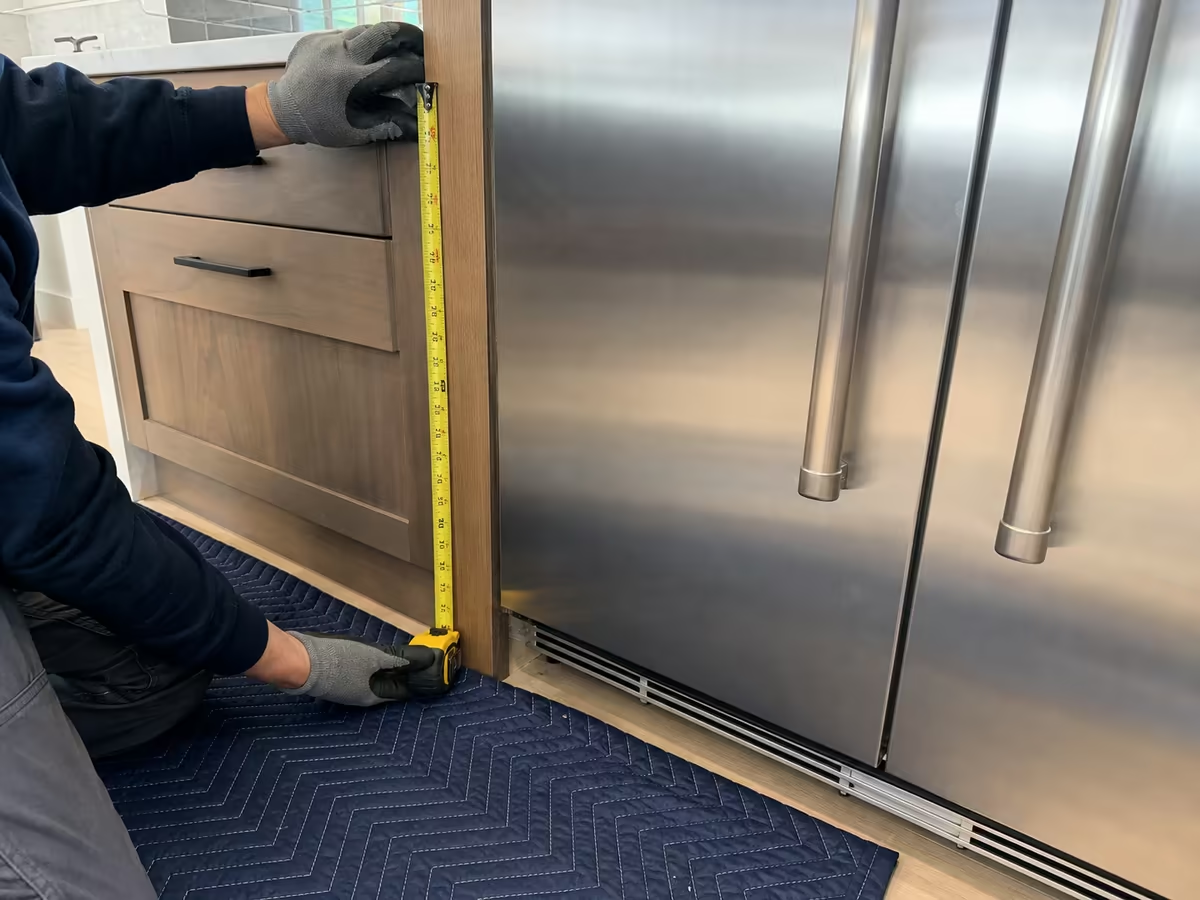
A sealed-system diagnosis means gauges and logged readings, done under EPA rules. If the circuit is fine, we keep the repair small — and tell you exactly what the numbers showed.
Reviews
Backed by our wider appliance repair network with 700+ customer reviews across platforms and a 4.9 average rating.
“Both compartments on our 650 were slowly warming here in Belvedere, and a prior company had already told us the compressor was shot. These folks put gauges on it and found a refrigerant leak instead. They located it, repaired it under EPA rules and recharged the system — far cheaper than the new built-in we were bracing for.”
— Carolyn F., Belvedere 94920“They ran the electrical and pressure tests before naming a single part, here in Corte Madera. The compressor turned out to be perfectly fine — the real fault was airflow. A straightforward gauge diagnosis saved us from a needless major sealed-system job someone else would have sold us.”
— Derek M., Corte Madera 94925“This time it really was the compressor — a 22-year-old unit here in Mill Valley — but they only said so after the gauges and electrical readings proved it. They recovered the refrigerant properly, fitted an OEM compressor, and logged stable temperatures across both compartments before they left.”
— Greg P., Mill Valley 94941Questions, answered for Mill Valley
Often not. A warm fresh-food side with a working freezer is usually condenser, fan or defrost related. The sealed system is confirmed with gauge pressures and logged temperatures before any refrigerant or compressor work, because condemning a compressor from a symptom is how people overpay.
No. Refrigerant is handled under EPA Section 608 rules: a leak has to be located and repaired, then the system recovered and recharged. “Topping up the gas” without finding the leak is neither legal nor a lasting fix, and it hides the real fault.
We read the model-tag, log a probe against the display, and test the board by serial. The readings tell us whether the cold loss is the refrigerant circuit or a sensor reporting wrongly — we do not swap an expensive part on a guess.
Sometimes, sometimes not. It is the one repair big enough to rival replacement, so we lay out the numbers honestly on the repair-vs-replace page once the diagnosis is confirmed.
Usually a two-visit job: a gauge-and-electrical diagnosis first, then the repair. Plan 2–6 hours of on-site work plus parts, with the Mill Valley range running $850–$3,750 depending on whether it is a leak repair or a compressor.
Indirectly, yes. Salt air off the bay corrodes condenser fins and makes the system run hot, which stresses the compressor over years. Keeping the coastal condenser clean is the cheapest way to protect a $1,600–$3,750 compressor.