Bayline Pros of Mill Valley brand markBayline ProsSub-Zero · Mill Valley

Symptom hub · temperature log first

Sub-Zero Not Cooling in Mill Valley: Temperature Log Guide

A short temperature log is the fastest way to keep a Mill Valley not-cooling complaint honest. Fresh-food warm while the freezer still holds points toward airflow, evaporator fan behavior, gasket leakage and condenser restriction before a compressor is blamed. Both sections warming is a different path and may justify sealed-system testing.

The log also protects older kitchens. If the unit is tightly built in near Cascade Canyon, Homestead Valley or Tam Valley, the first safe checks are doors, settings, grille blockage and recent power events. Pulling the cabinet before those facts are captured can damage millwork and erase evidence.

Quick answer

A Mill Valley Sub-Zero not cooling should be logged by compartment before a major part is quoted. Have fresh-food, freezer and ambient kitchen temperatures, any alarm code, door-open events and model-tag photo ready; sealed-system work needs measured electrical and pressure proof.

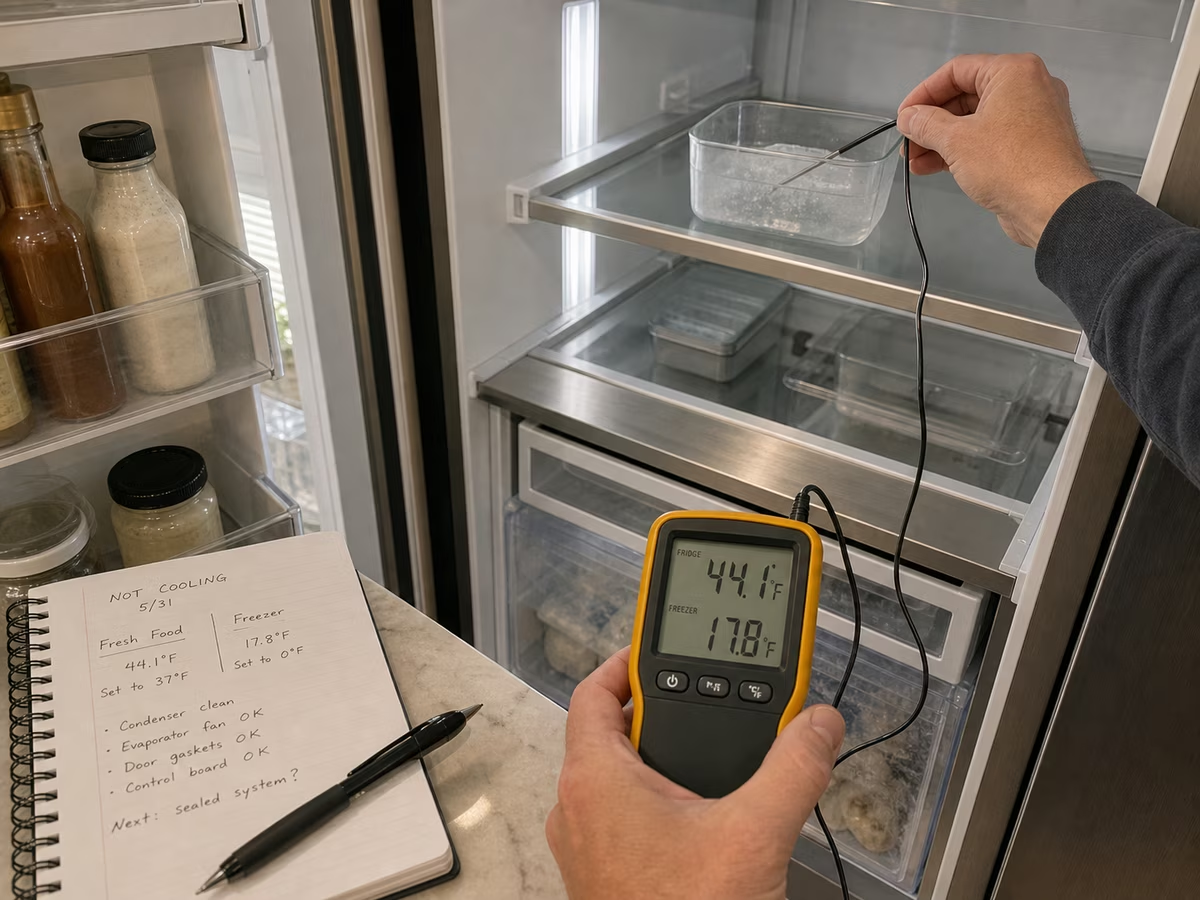
Fresh-food and freezer temperature readings logged for a Mill Valley Sub-Zero not-cooling diagnostic
SERVICE IMAGEFresh-food and freezer temperature readings logged for a Mill Valley Sub-Zero not-cooling diagnostic
sub-zero-not-cooling-readings-millvalley.avif
TEMP LOGTemperature log first: it separates airflow from sealed-system suspicion.

Printable-style log

Temperature log to have ready before the visit

Sub-Zero temperature log fields
FieldWhat to recordWhy it matters
Fresh-food sectionDisplayed reading and probe reading if availableShows whether airflow or damper path is failing.
Freezer sectionDisplayed reading and probe reading if availableFreezer holding changes the compressor assumption.
Wine zoneUpper/lower zone if relevantSeparates wine drift from refrigerator airflow.
Ambient kitchen temperatureApproximate room temperatureTight cabinets and warm rooms change run time.
Door-open eventsLong loading, cleaning or party useHumid air can create temporary frost and false alarms.
Alarm or codePhoto of displayCodes are serial-specific and should not be read from a generic chart.
Not-cooling decision tree
PatternLikely first checksWhat not to assumePlanning range
Fresh-food warm, freezer OKAirflow, evaporator fan, defrost, gasket, condenserCompressor failure$150–$230 diagnosis, repair after proof
Both sections warmCondenser, compressor operation, sealed-system evidenceSimple gasket leak only$1,450–$3,600 if sealed system is proven
Runs constantlyCondenser restriction, fan, dirty coil, door leakNormal agingDiagnosis plus measured repair
Short cyclingStart component, board, compressor electrical checksLow refrigerant without testing$350–$1,250 control/sensor path or sealed-system proof
Frost on back wallDefrost heater, thermostat, fan and door leakJust defrost and forget itDiagnosis first
Alarm with warmingCode by serial plus temperaturesUniversal code chartCode interpretation and measured test

Local cautions

What not to do before diagnosis

Do not keep resetting the unit, do not defrost a repeated frost pattern as if it were the repair, and do not force a built-in out of a tight cabinet. Coastal fog can load the cabinet with humid air after every door opening, so repeated resets and door checks can make the symptom worse. Capture readings, keep photos ready and preserve the evidence.

Example log

How a short log changes the diagnosis

A fresh-food section at 48°F with a freezer still near 4°F tells a different story than both sections drifting warm together. The first pattern often points to airflow, evaporator fan behavior, defrost or gasket leakage. The second can move condenser, compressor and sealed-system evidence higher on the list. The log does not replace the visit; it prevents the visit from starting with the wrong assumption.

Two-reading log example
TimeFresh-foodFreezerKitchen / eventInterpretation
7:00 AM44F2FDoors closed overnightFresh-food high while freezer holds; start with airflow and fan path.
12:00 PM49F3FNormal door useTrend confirms fresh-food path, not immediate compressor verdict.
5:00 PM51F5FFoggy afternoon, frequent door openingsHumidity can worsen gasket and frost clues; preserve pattern photos.
Next morning46F2FAfter doors stayed closedPartial recovery suggests airflow or door leak before sealed system.

If both sections were climbing together, the table would be interpreted differently. That is when a condenser restriction, compressor electrical problem or sealed-system fault may need pressure and electrical evidence. The important point is narrow: do not collapse every not-cooling complaint into a compressor quote.

When to move food or pause use
ConditionActionWhy
Fresh-food above safe range and risingMove perishables to backup coolingFood safety outranks diagnosis.
Freezer still holding but fridge warmLog readings and reduce door openingsPreserves airflow and door-leak evidence.
Alarm repeats after resetStop clearing it and record the codeRecurring alarms need cause, not silence.
Water leak or electrical smellStop use and request urgent guidanceSafety issue, not a routine log.

Fast facts

Sub-Zero temperature facts for Mill Valley

  • A healthy Sub-Zero holds about 37°F in the fresh-food section and 0°F in the freezer; readings are best logged over a full cycle before any quote.
  • A warm fresh-food side at 45–55°F with a still-cold freezer usually means airflow, the evaporator fan or defrost — not the compressor.
  • If both compartments climb together, a condenser restriction or sealed-system fault is more likely and needs gauge and electrical evidence.
  • Mill Valley range to restore a warm fresh-food section: $190–$720, depending on whether it is a coil clean, an evaporator fan or a defrost part.

Reviews

What Mill Valley Sub-Zero owners say

★★★★★

“Our Sub-Zero 632 was warm up top — fresh-food climbed to 52°F while the freezer held at 0°F. Tech reached Homestead Valley within a few hours, found a failed evaporator fan and a dust-packed condenser, and brought it back to 37°F the same day. $415 for the fan and coil clean.”

— Hannah W., Homestead Valley 94941
★★★★★

“Freezer fine, fridge side warming after the foggy week. They logged temps before touching anything and it was a defrost heater fault, not the compressor. $360, done in two hours in Strawberry.”

— Andre C., Strawberry 94941
★★★★★

“650-series running constantly and drifting warm in Tam Valley. Salt air had corroded the condenser; a deep clean and airflow restore fixed it for $230 with no parts needed.”

— Owen B., Tam Valley 94941

Not-cooling FAQ

Mill Valley temperature questions

What should I check before calling for a Sub-Zero refrigerator not cooling in Mill Valley?

Check that doors are fully closed, the grille is not blocked, temperature settings were not changed, and there was no recent power event. Then record fresh-food and freezer readings. Do not keep resetting the unit or force a cabinet pull-out; those steps can hide evidence or damage millwork.

Fresh-food warm but freezer cold: is it the compressor?

Usually no. A Mill Valley Sub-Zero that is warm in the fresh-food section while the freezer still holds should be checked for airflow, evaporator fan behavior, gasket leakage and condenser restriction before a compressor is blamed.

What temperature readings should I have ready?

Have fresh-food temperature, freezer temperature, wine-zone reading if relevant, ambient kitchen temperature, door-open events and any alarm code ready. A 12-24 hour log is useful, but even two readings a few hours apart can separate airflow from sealed-system suspicion.

Can fog or humidity cause a not-cooling complaint?

Fog and humidity do not break a refrigerator by themselves, but they amplify gasket leaks, condensation, frost lines and condenser corrosion. In tight built-in cabinets, that can make a normal airflow issue look like a larger cooling failure.

What should I not do before a not-cooling visit?

Do not keep resetting the cabinet, thaw a frost pattern as if it were the fix, pry at the door gasket, or force a built-in out of the cabinet. Those steps can destroy diagnostic clues and add cabinet risk before the actual cause is measured.

When is sealed-system testing needed?

Sealed-system testing is needed when readings suggest both compartments are warming, the compressor is running without expected temperature drop, or pressure/electrical evidence is required. It should not be quoted from a phone description alone.

Call (415) 683-1487Book online