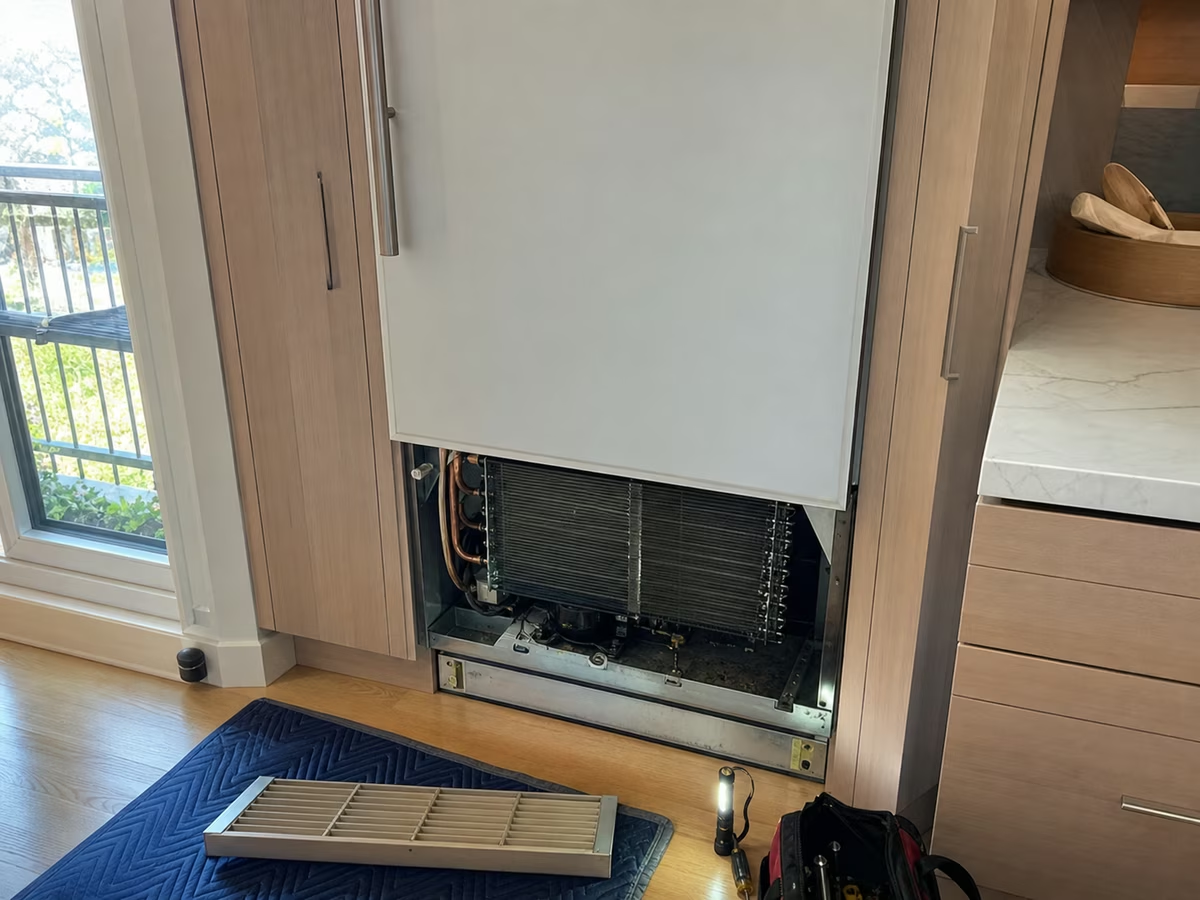
A Sub-Zero that keeps the refrigerator perfectly cold while the freezer slowly thaws is not a failing machine — it is one half of a failing machine. Built-in Sub-Zeros split the work between two coils, each with its own fan and its own defrost cycle, and the wider 600- and BI-series units add a second compressor for the freezer entirely. That separation is exactly why ice cream goes soft and the meat drawer sweats while the milk on the door shelf is still icy. The good news for Mill Valley owners is that it narrows the search: we are chasing the freezer side, and the freezer side has a short list of usual suspects.
The first thing we ask before driving out to Cascade Canyon or down to the Strawberry flats is what the inside of the freezer looks like. A coil sealed under a thick, even slab of frost tells a completely different story from a coil that is bone dry and lifeless. Heavy frost means the automatic defrost has stopped clearing the evaporator — a tired heater, a drifting sensor, or a control board that simply is not calling for defrost — and the ice wall it builds then strangles the airflow until the cabinet warms. No frost and no cold usually means the evaporator fan has stalled or the sealed system has lost its punch. Reading that one detail correctly saves a wasted trip up the hill.
This is also where a warm freezer parts company with a refrigerator that has stopped cooling overall: the diagnosis, the parts and the fix are different, and logging temperatures over a day often confirms which circuit is actually struggling. When the lower compressor on a dual-system unit is the culprit, the work moves into sealed-system and compressor territory, which we handle on-site with recovery equipment rather than swapping boards on a hunch.