Bayline Pros of Mill Valley brand markBayline ProsSub-Zero · Mill Valley

Wine hub · dual-zone drift

Sub-Zero Wine Column Temperature Drift in Mill Valley

A Sub-Zero wine column drifting a few degrees in Mill Valley is usually a thermistor, damper, door-seal or condenser airflow question before it is a sealed-system conclusion. Foggy, cellar-like homes can make condensation and gasket clues more visible, while tight cabinetry can make heat rejection harder.

The useful first step is a reading log, not moving bottles in and out. Record upper and lower zone readings, set points, ambient kitchen temperature, door openings and alarms. A logged probe against the display tells whether the cabinet is truly drifting or only reporting incorrectly.

Quick answer

Sub-Zero wine-column drift in Mill Valley should be diagnosed with a zone log and probe verification. Sensor or board diagnosis plans at $350-$1,250; gasket-related work plans at $400-$900; sealed-system work is considered only after pressure/electrical evidence.

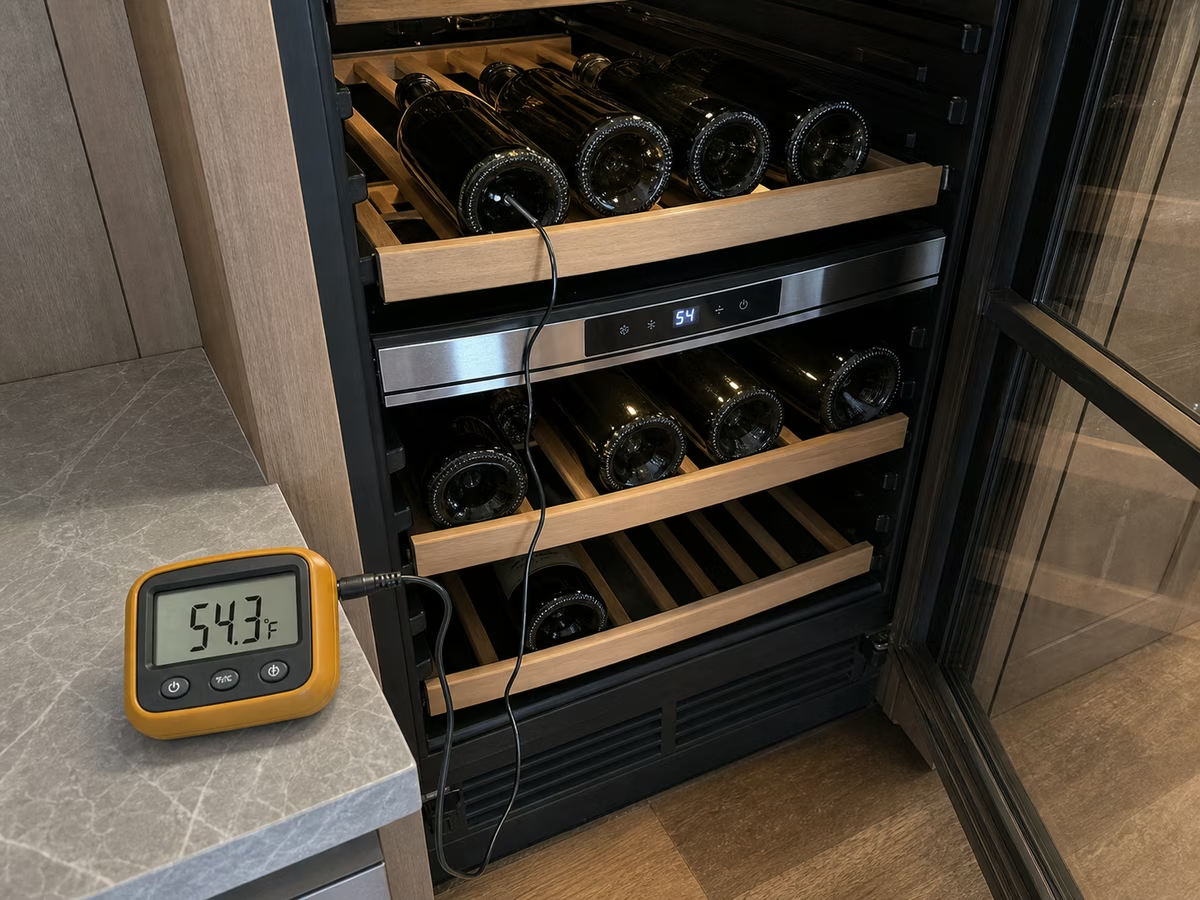
Probe logging a Sub-Zero wine column zone in Mill Valley before a temperature-drift quote
SERVICE IMAGEProbe logging a Sub-Zero wine column zone in Mill Valley before a temperature-drift quote
sub-zero-wine-column-probe-millvalley.avif
WINE LOGProbe vs display: the key test before replacing a wine-column part.

Wine drift table

What a few degrees of drift can mean

Wine column drift diagnostic table
PatternLikely first checksRepair pathPlanning range
One zone steady offsetThermistor, probe vs display, board readingSensor or control diagnosis$350–$1,250
One zone slow to recoverDamper, airflow, door openingsDamper or airflow correctionRange after measured diagnosis
Condensation near doorDoor seal, hinge alignment, cabinet fitGasket or alignment path$400–$900
Both zones slowly warmCondenser airflow, fan, cabinet heatAirflow or sealed-system escalation$1,450–$3,600 only after proof
Alarm plus driftSerial-specific code, thermistor and board testDo not quote board until readings agree$350–$1,250
Wine-zone log
FieldRecordWhy
Upper zoneSet point and actual readingShows single-zone vs whole-cabinet drift
Lower zoneSet point and actual readingSeparates damper/sensor causes
Ambient kitchenApproximate room temperatureTight cabinets can heat-soak
Door eventsRecent loading or long openingHumidity and warm air create temporary drift
Alarm/codePhoto of displayCode meaning depends on serial

Do not relocate bottles for a small temporary drift unless the zone climbs well out of range and stays there. Keeping the cabinet stable gives the diagnostic reading a better chance of matching the real complaint.

Interpretation

How the zone log points to the next test

A wine column is less forgiving than a refrigerator because the expected band is narrower and owners watch the display more closely. A two-degree swing after a long door opening is not the same as a five-degree drift that repeats every afternoon. In Mill Valley, the cabinet environment adds another layer: foggy air makes gasket leaks show up, older cabinetry can trap heat, and hillside kitchens may have uneven floors that affect tall door alignment.

Wine log interpretation
Log patternMost useful next testBad assumption to avoid
Upper zone only highUpper thermistor, damper and airflow checkReplacing a shared board first
Lower zone only highLower probe vs display and damper responseCalling the whole cabinet weak
Both zones warm slowlyCondenser airflow, fan and cabinet heatIgnoring grille restriction
Display disagrees with probeThermistor and board reading by serialTrusting display alone
Drift follows door useGasket, hinge and humidity patternMoving bottles repeatedly to test
Alarm follows driftCode by serial plus temperature proofUniversal alarm chart

The owner-safe action is to stabilize the cabinet, log readings and keep photos ready. The technician-side work is probe verification, serial-specific code reading, airflow inspection and, only if those point there, sealed-system evidence. That order protects the collection and keeps a sensor issue from becoming an unnecessary major quote.

Owner actions before a wine-column visit
ActionGood reasonAvoid
Record readings twice a dayShows stable offset vs worsening driftOpening the door every hour
Photo the display and tagConnects code and part to serialTyping model from memory
Note nearby heat sourcesSun, ovens and tight cabinets affect recoveryAssuming all drift is internal failure
Keep bottles stable unless unsafePreserves real operating conditionRepeated loading as a test
Have cabinet photo readyShows ventilation and panel alignmentRemoving trim yourself

Fast facts

Sub-Zero wine-column temperature facts for Mill Valley

  • Sub-Zero wine columns hold each zone within about 1–2°F of setpoint; a steady 3–5°F drift in one zone is usually a thermistor, damper or door seal.
  • Both zones warming together points to airflow or the condenser rather than a single sensor.
  • Foggy Mill Valley weeks expose tired wine-cabinet gaskets first; a $360–$760 seal often stops the drift before any sensor is replaced.
  • Mill Valley wine-column repairs typically run $280–$1,150, from a zone thermistor or damper to a dual-zone control board.

Reviews

What Mill Valley Sub-Zero owners say

★★★★★

“Our 424 wine column lower zone read 58°F against a 55°F setpoint after the fog rolled into Strawberry. They logged a probe over a full cycle and replaced the zone thermistor and damper for $410 — drift gone, collection never at risk.”

— Vivian S., Strawberry 94941
★★★★★

“Dual-zone wine cabinet drifting a few degrees in Mill Valley. A failing sensor, not the sealed system. Calibrated and replaced the thermistor for $330 and documented every reading.”

— Owen B., Mill Valley 94941
★★★★★

“427 wine unit warming a few degrees in Corte Madera. The door gasket had compressed and was leaking room air; a new OEM seal for $640 and it holds temperature again.”

— Helen V., Corte Madera 94925

Wine drift FAQ

Temperature questions for wine columns

Is a few degrees of wine-column drift serious?

A steady drift is worth diagnosing, but it is not automatically a sealed-system failure. Sub-Zero wine columns often drift because of thermistor, damper, door-seal or condenser airflow issues. A logged probe against the display is the first useful test.

What should I log for a wine column?

Log upper-zone reading, lower-zone reading, set points, ambient kitchen temperature, door openings and any alarm. If the drift repeats at the same time of day, mention nearby sun exposure or cabinet heat.

Does foggy Mill Valley weather affect wine storage?

Foggy weather raises ambient moisture, which can expose gasket leaks and cabinet condensation. It does not directly change the set point, but it can make door-seal and airflow problems easier to see.

Should I move bottles out before service?

Move bottles only if a zone climbs well out of range and stays there. For a small drift, keep the cabinet stable and record readings so the diagnostic test reflects the real operating condition.

How much does wine-column temperature repair cost?

Wine-column work often overlaps with sensor, damper, gasket, airflow or control-board ranges: $350-$1,250 for control or sensor diagnosis and $400-$900 for gasket or seal-related work. The final quote depends on model, zone and access.

Can a wine column alarm mean the control board is bad?

It can, but it often means a sensor is reporting incorrectly or airflow is off. The code must be read against the serial number before a board is quoted.

Call (415) 683-1487Book online