
Frozen or clogged defrost drain
Meltwater from the defrost cycle can no longer run off, so it backs up and spills out the front. The most common leak on built-ins here, and usually a straightforward clear-and-flush once we confirm it.
Sub-Zero symptom · Mill Valley
Water pooling on the floor in front of a built-in Sub-Zero almost always traces back to one of four things — a frozen defrost drain, the ice-maker line, condensation, or a tired gasket. We find which one before it reaches your flooring, anywhere across Southern Marin.
5.0/5 · 1,295 verified customer reviews
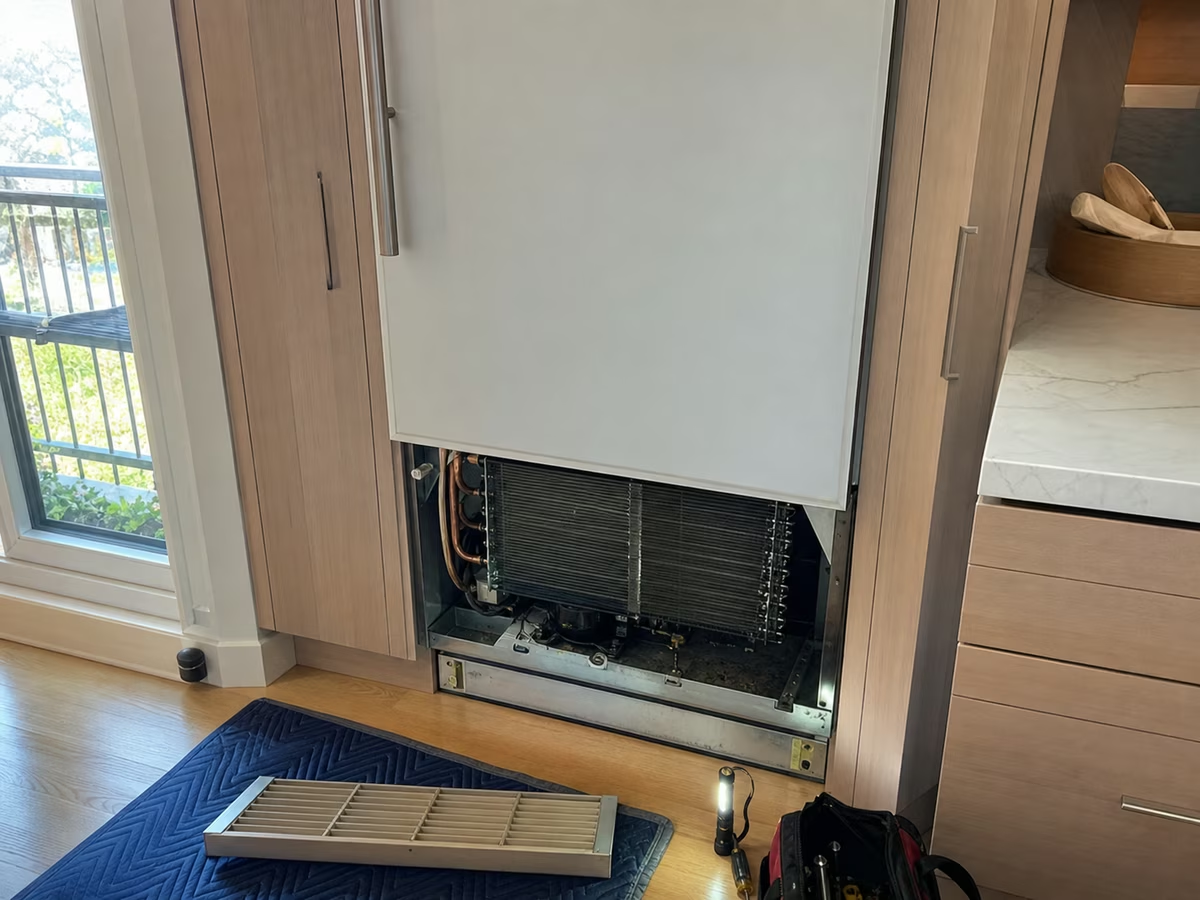
A puddle under a Sub-Zero looks alarming, but it is one of the more solvable faults we deal with — provided you find the source rather than the symptom. The refrigerator itself moves a surprising amount of water around every day: meltwater from the defrost cycle, the ice-maker's fill supply, and condensation that forms whenever warm air meets a cold surface. As long as each of those is being carried away to evaporate over the compressor, you never see a drop. A leak means one of those paths has broken, and the job is to work out which.
Location is the quickest tell. Water gathering at the front kick plate, especially right after a defrost cycle, almost always means the defrost drain has frozen or clogged and backed up. Water appearing toward one side or behind the unit, often after the ice-maker harvests, points at the fill line or inlet valve. A slow film inside the cabinet, with condensation beading on the walls, points instead at humidity and the door seal. We dry the area, watch where the water returns first, and let that decide where we open the unit.
Two of these sources overlap with pages you may already be reading: the ice-maker supply is covered in detail on our ice-maker and water-line page, and condensation that beads and runs because of a weak seal is exactly the fog, gasket and condensation problem this fog-belt town knows well. A seal that has lost its grip is also a job for the door gasket repair.
Find the source
Meltwater from the defrost cycle can no longer run off, so it backs up and spills out the front. The most common leak on built-ins here, and usually a straightforward clear-and-flush once we confirm it.
A weeping shut-off valve, a cracked fill tube or a leaking inlet valve drips at one side or behind the unit. Often shows up after an ice harvest and is confirmed by isolating the ice-maker.
When humidity overwhelms the system or the drain path is partly blocked, water condenses inside and runs rather than evaporating. Common in damp, fog-belt kitchens and tied closely to the gasket's condition.
A seal that no longer pulls tight lets warm, moist room air in, where it condenses on cold surfaces and trickles down. We check the gasket on every leak call because it both causes water and lets the drain freeze faster.
Before we arrive
These narrow the source without taking anything apart. When you are ready, our Mill Valley repair-cost guide shows what a drain clear, a valve or a gasket typically runs, and the Sub-Zero repair hub links the rest of what we service.
Local angle
Mill Valley's fog belt is the reason this call comes in so often. The marine air rolling off Richardson Bay and down through Tennessee Valley keeps kitchen humidity high, so every Sub-Zero here produces more defrost meltwater and more condensation than the same unit would inland. That extra water has to make it down a narrow defrost drain; mix in a little redwood grit and food debris and the drain ices into a plug faster than almost anywhere in the Bay. A frozen defrost drain backing up is the leak we clear most.
Where the leak does its damage depends on the house, and Mill Valley has two very different kinds. On the slab-foundation flats and condos around Strawberry and Almonte, a leak spreads sideways across the floor where you will spot it quickly but it can creep under cabinet runs. On the older raised-foundation redwood cottages up in Blithedale Canyon, Homestead Valley and Old Mill, the same leak can slip through a gap and drip onto the subfloor below, quietly swelling joists and kick panels for weeks before anyone notices a soft spot. That is why we treat even a small recurring puddle as worth stopping properly rather than mopping.
If a mixed kitchen also runs Wolf or Viking equipment with its own water or drainage quirks, we can look at those on the same Southern Marin visit.
FAQ
Four sources cover almost every call: a clogged or frozen defrost drain that backs up and overflows, the ice-maker's fill line or shut-off valve seeping, condensation that is no longer being carried away, or a door gasket letting humid air in so moisture condenses and runs. The location of the puddle is the first clue — water at the front kick plate usually means the defrost drain, water at one side often means the ice-maker line, and a slow film inside the cabinet points at condensation or the seal.
Mill Valley's damp, fog-belt air means every defrost cycle produces more meltwater than it would in a dry climate, and that water has to run down a narrow drain to evaporate over the compressor. Add a little redwood grit or food debris and the drain ices into a plug; the next defrost then has nowhere to go and spills into the cabinet and onto the floor. A frozen defrost drain is the single most common leak we clear on built-ins in 94941.
Mopping treats the puddle, not the cause, and a recurring leak under a built-in is worth stopping properly. Standing water can lift flooring, swell cabinet kick panels and, on raised-foundation cottages, drip through to the subfloor where you will not see it. Catching the source early — usually a quick drain clear or a gasket — is far cheaper than the cabinetry and floor repair a slow leak eventually causes.
Trace where the water is freshest. A Sub-Zero leak is centered under or just in front of the refrigerator and often appears after a defrost cycle or ice harvest; a supply-line or dishwasher leak tends to track from the wall or the adjacent cabinet. If the water is clean and cold and worst right at the fridge, it is almost certainly the appliance. We confirm the source on-site before any repair so you are not paying to chase the wrong leak.
Why us
Book a leak diagnosis
Independent service · not affiliated with or authorized by Sub-Zero · OEM parts · 365-day warranty on parts and labor