
12-year-old built-in, warm side
Evaporator fan and a coil clean. Clearly a repair — modest cost, decades of cabinet life left, replacement would mean canyon-access millwork work.
Decision · repair economics for built-ins
When a door gasket leak, condensation or a frost line finally pushes a homeowner near Mount Tamalpais to ask “is this thing worth fixing,” the honest answer depends on more than the part. A gasket is cheap and almost always worth repairing; the calculation changes only when several expensive systems are failing at once on a very old cabinet.
The harder case is a sealed-system suspicion that needs EPA-compliant verification — the one repair big enough to rival replacement cost. Here is the limitation no calculator can resolve: until we verify the sealed system with gauges, we don’t know if it’s a true failure or a cheaper part imitating one. So this page gives you a framework, not a verdict, and the verdict comes after diagnosis.
Quick answer
Most Sub-Zero faults are worth repairing — built-ins are engineered for decades and replacement disrupts custom cabinetry. Replacement deserves real consideration mainly when a sealed-system or compressor failure lands on a very old unit. We diagnose first, then lay out the numbers honestly.
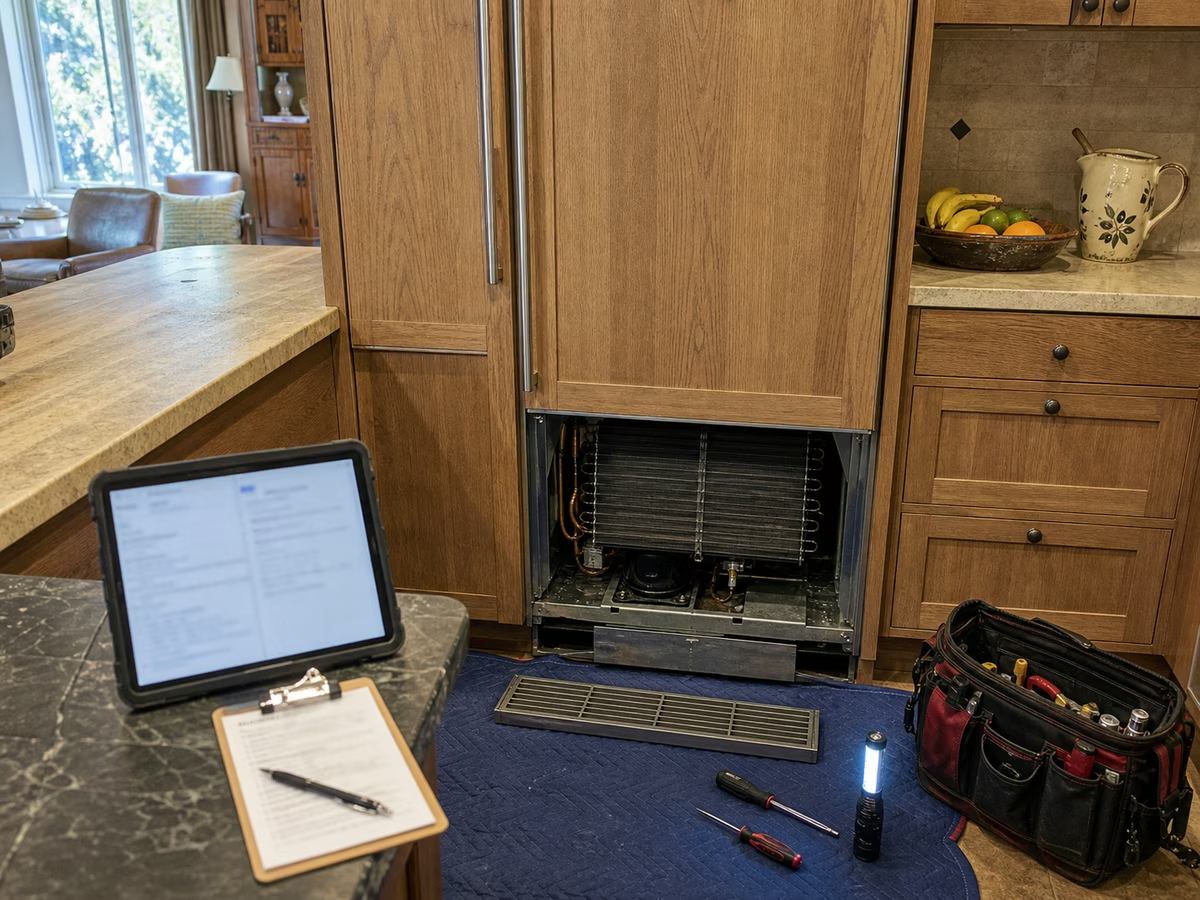
Decision framework
Weigh these six factors together. No single row decides it; a high score in two or three is what tips a built-in toward replacement.
| Factor | Leans toward repair | Leans toward replace |
|---|---|---|
| Unit age | Under ~15 years | 20+ years with multiple failures |
| Cabinet / remodel impact | Custom millwork to protect | Kitchen remodel already planned |
| Part availability | Parts in production | Obsolete parts, long lead times |
| Safety | Standard repair | Repeated sealed-system / electrical faults |
| Repair cost | Fan, gasket, board, ice maker | Major sealed-system on an old cabinet |
| Replacement disruption | High (cabinetry rework) | Low (already renovating) |
Brand economics
A builder-grade refrigerator is easy to swap: pull it out, roll a new one in. A built-in Sub-Zero is integrated into the cabinetry, often panel-ready, and replacement frequently means millwork changes, a new panel, and sometimes a different cutout. That disruption is real money on top of the appliance, which is why “repair always wins” is too glib in one direction and “just replace it” is too glib in the other. The honest cases for replacement do exist: an old cabinet facing a major sealed-system repair plus obsolete parts is a genuine candidate, especially if a remodel near Old Mill Park is already on the table. We will say so when the numbers point that way.
Local scenarios
Three common Mill Valley situations and how the repair-versus-replace decision plays out.
Evaporator fan and a coil clean. Clearly a repair — modest cost, decades of cabinet life left, replacement would mean canyon-access millwork work.
A verified compressor failure with hard-to-source parts. Here replacement is a fair conversation, especially if the kitchen is due for an update.
A thermistor and damper on an otherwise healthy cabinet. Repair, every time — the column is fine, one zone just needed a sensor.
Cost slots (confirmed after diagnosis)
| Item | Typical range |
|---|---|
| Diagnostic / service call | $150–$230 |
| Gasket, ice maker, sensor or board work | $275–$1,250 |
| Expensive exception (sealed system / compressor) | $1,450–$3,600 |
| Replacement disruption (cabinetry, panel, install) | Varies — often the deciding figure |
Planning ranges are confirmed in writing after we see the unit. Along Throckmorton Avenue’s older village homes, the cabinetry disruption line is frequently what settles the decision — not the appliance price. The slot-by-slot breakdown behind these figures lives in the Sub-Zero repair price ranges in Mill Valley guide.
Whatever the path, the evidence is the same: temperature readings, condenser/evaporator photos, model-tag proof and OEM fan, gasket or control-board evidence. A built-in cabinet removal/reseat is planned and documented, never improvised.
Fast facts
Reviews
Backed by our wider appliance repair network with 700+ customer reviews across platforms and a 4.9 average rating.
“Our 20-year-old 642 here in Mill Valley needed a sealed-system repair and we genuinely didn’t know whether to fix or replace. They laid out the repair against the cost of replacing a panel-ready built-in with all the cabinetry work, no pressure either way. Keeping it clearly made sense.”
— Helen V., Mill Valley 94941“Got a straight answer on fix versus replace, with the panel and millwork cost actually factored in rather than just the appliance. A door and gasket repair on our Corte Madera built-in made far more sense than tearing out a perfectly good cabinet. Honest advice.”
— Marcus D., Corte Madera 94925We’ll diagnose first, then give you the real numbers — repair cost, the expensive exception if it applies, and the disruption of replacing a built-in — so you can decide with facts, not pressure.
Questions, answered for Mill Valley
Usually yes. Built-ins are engineered for decades, and replacement disrupts custom cabinetry. Replacement is mainly worth considering when a major sealed-system failure lands on a very old unit with obsolete or slow-to-source parts.
It is integrated into the cabinetry and often panel-ready, so replacement can mean millwork changes, a new panel and sometimes a different cutout — real costs on top of the appliance itself.
We diagnose first, then weigh age, cabinet impact, part availability, safety, repair cost and replacement disruption together. No single factor decides it; two or three high scores tip it toward replacement.
No. We will tell you when a repair is the clear choice, and equally when an old cabinet facing a major sealed-system repair is a fair replacement candidate.
Age alone rarely decides it. Even 20–25-year-old built-ins are often worth repairing; replacement becomes fair when a major sealed-system failure near $1,400 lands on an old cabinet with obsolete parts and a $9,000-plus replacement that disrupts custom cabinetry.
Mill Valley built-ins are usually panel-ready and integrated into custom millwork, so replacement can mean a new panel, cabinet changes and sometimes a different cutout on top of the appliance and installation.