
Condenser or evaporator fan
The two fans run for long stretches, so worn bearings or a dust-bound blade are the number-one source of a new buzz, hum or whir. The most common quiet-able noise once a worn motor is replaced.
Sub-Zero symptom · Mill Valley
A built-in Sub-Zero is meant to disappear into the kitchen, so a new buzz, drone, rattle or grind stands out — especially in an open hillside great room. The kind of sound, and where it comes from, points straight at the part. Here is how we read it across Southern Marin.
4.9/5 · 1,285 verified customer reviews
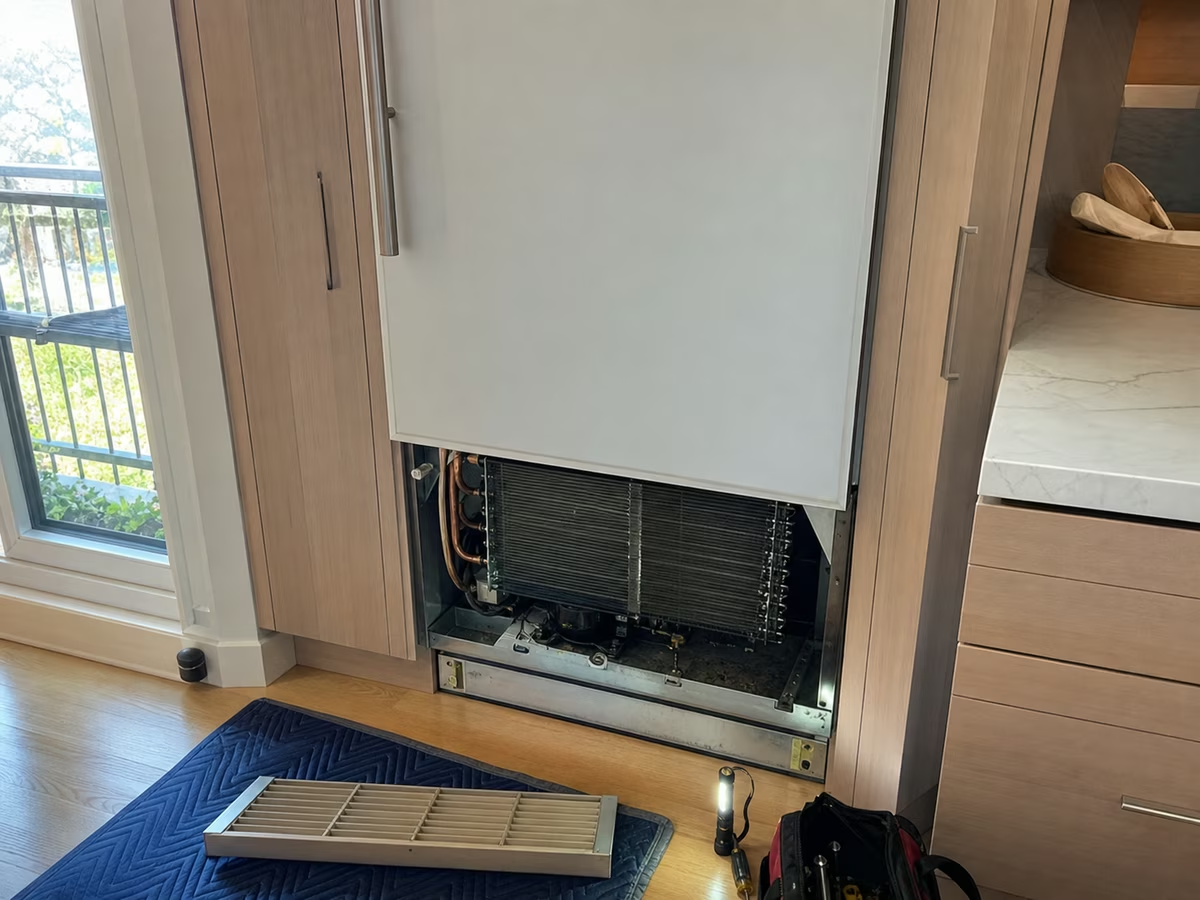
Refrigerators are not silent, and a healthy Sub-Zero makes a handful of sounds you should expect to hear: a low hum from the compressor, a steady whir from the fans, the soft gurgle of refrigerant on the move, and a periodic click as the defrost cycle starts and stops. The skill in diagnosing a loud Sub-Zero is separating those ordinary noises from the ones that mean a part is wearing out. The fastest way to do that is to describe the sound precisely — a worn fan bearing buzzes and drones, a failing blade rattles or scrapes, a labouring compressor deepens into a vibration you can feel, and the ice-maker announces itself with clunks and fill-valve hums on a schedule of its own.
Where the sound originates matters just as much as its character. Noise from the upper grille is usually the condenser fan or the compressor; noise from inside the cabinet is the evaporator fan or the ice-maker; a buzz that seems to come from the cabinetry itself is often vibration transferring into the surrounding millwork. Once we know the what and the where, the cover comes off and we confirm before replacing anything — we will not swap a fan motor that turns out to be a clip rattling against a coil.
If the noise arrives together with a unit that is also struggling to cool, the conversation shifts toward the sealed system and compressor, where a labouring or short-cycling compressor can be both loud and weak. A grinding from the freezer that turns out to be mechanical rather than refrigeration sometimes traces back to the same ice-maker hardware we cover on the ice-maker and water-line page.
Read the sound
The two fans run for long stretches, so worn bearings or a dust-bound blade are the number-one source of a new buzz, hum or whir. The most common quiet-able noise once a worn motor is replaced.
A deepening drone or a vibration you feel through the floor can be a compressor straining against a clogged condenser or sitting on a hardened rubber mount. Cleaning the coil often settles it before parts are needed.
Fill-valve hum, harvest clunks and a grinding auger come from the ice-maker rather than the cooling system. Easy to confirm by switching it off, and usually a self-contained repair.
Periodic clicks and pops are normally the defrost cycle, relays switching, or plastic parts moving with temperature. Benign on their own — a concern only when paired with a real mechanical noise or poor cooling.
Before we arrive
A clean condenser grille resolves a surprising share of "loud fridge" calls on its own. If the noise survives the vacuum, our Mill Valley repair-cost guide shows what fan-motor and compressor work typically runs, and the main Sub-Zero repair hub covers everything else we service.
Local angle
Two things about Mill Valley homes turn an ordinary fan noise into a complaint. The first is the architecture. So many kitchens here — the contemporary builds stepping up the slopes above Old Mill Park, the great-room remodels in Cascade Canyon, the lofted ceilings in Sycamore Park — are open to the living space with hard surfaces and big volumes. A built-in nested in cabinetry uses that millwork as a soundboard, and a drone that would vanish in a small closed kitchen carries across the whole floor, loudest in the evening when the house finally goes quiet.
The second is the climate. The damp, redwood-shaded air that defines this town is hard on the very parts that make noise. Fan motor shafts corrode and stiffen, blades collect a film that throws them out of balance, and condenser coils trap the pollen and grit that drift down off Mount Tamalpais — all of which forces the fan and compressor to work, and complain, harder than they would inland. On older raised-foundation cottages in Blithedale Canyon and Homestead Valley, a little floor flex lets that vibration travel further still, which is why two identical units can sound completely different in two Mill Valley houses a mile apart.
We test in the actual room rather than on a bench, because that is where the noise lives. If the kitchen also runs Wolf cooking equipment or a Viking range, we can look at those on the same visit instead of sending a second truck up the hill.
FAQ
A new noise is worth attention but rarely an emergency. A soft hum or an occasional click is normal; a grinding, scraping or metallic rattle means a moving part — almost always a fan motor or its blade — is failing and should be looked at before it seizes. If the loud noise comes with the cabinet warming up, treat it as more urgent, because the same fan that is screeching may also have stopped moving cold air. Note exactly what it sounds like and whether cooling has changed before you call.
A rising buzz or drone is most often a condenser or evaporator fan motor whose bearings are wearing, or a compressor laboring against a condenser packed with dust. The fix can be as simple as vacuuming the grille, or it can mean replacing a fan motor. In Mill Valley homes the damp redwood air corrodes fan shafts and cakes coils faster than in a dry inland kitchen, so this is one of the most common calls we take in 94941.
That is usually the room, not a worse fault. Many Mill Valley kitchens are open-plan great rooms with hard floors and high ceilings on the hillsides above Old Mill Park and Sycamore Park, and a built-in tucked into cabinetry uses the millwork as a sounding board. A fan or compressor noise that would be inaudible in a closed galley kitchen carries clearly here at night when the house is quiet — which is exactly when owners first notice it.
Often yes. Gurgling or a faint boiling sound is refrigerant moving through the sealed system; popping is plastic interior parts expanding and contracting through the defrost cycle; a single firm click every few hours is usually the defrost timer or a relay switching. These are only a concern when they arrive alongside poor cooling or a new mechanical noise — then it is worth a look at the sealed system rather than writing it off as normal operation.
Why us
Book a noise diagnosis
Independent service · not affiliated with or authorized by Sub-Zero · OEM parts · 365-day warranty on parts and labor