
Seasonal guide · 6 min read
A Mill Valley seasonal calendar for your built-in Sub-Zero
When the redwood shade lifts, when the summer fog rolls off Richardson Bay, and when wildfire smoke arrives — a season-by-season maintenance plan for a built-in Sub-Zero in Mill Valley.
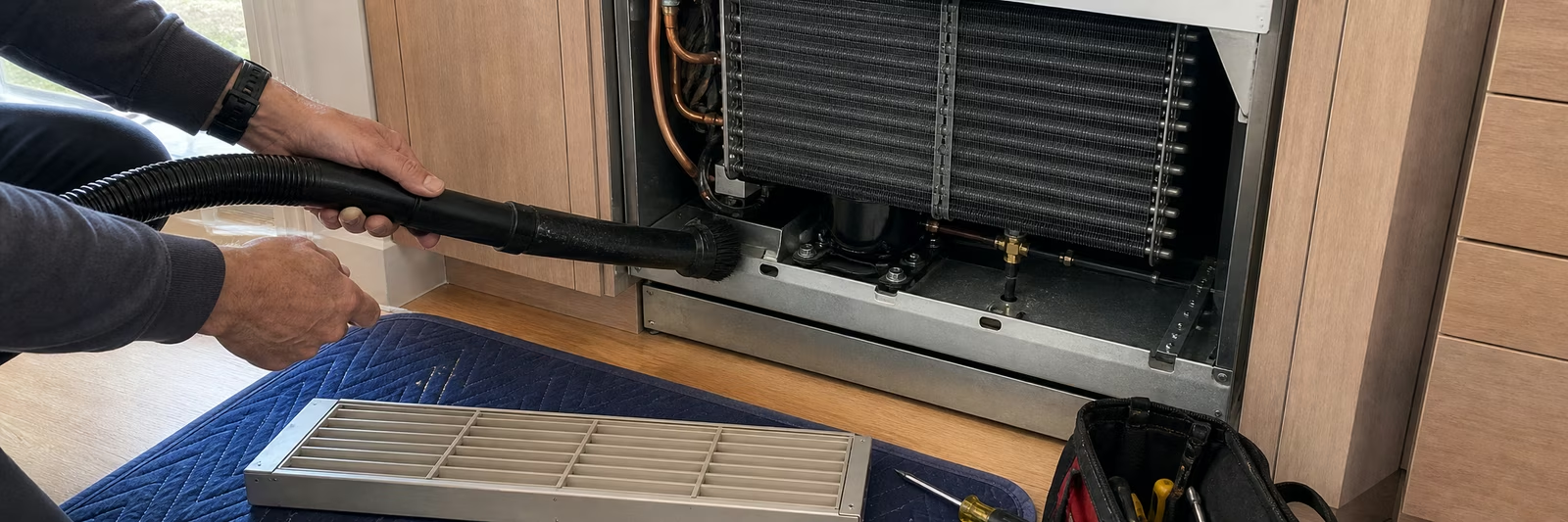
Mill Valley doesn't have one climate; it has four or five within a couple of miles. A kitchen tucked under the redwoods off Cascade Canyon stays cool and damp into June, while a south-facing house up the Tam hillside bakes by afternoon, and the flats down toward Tam Valley and Almonte sit in the marine layer that pushes in off Richardson Bay almost every summer evening.
A built-in Sub-Zero responds to all of that. Rather than a vague "service it once a year," here is a calendar tied to what each Mill Valley season actually does to the unit.
Late winter to spring: clear the damp-season buildup
By the end of the rainy season a Mill Valley kitchen has spent months in cool, humid air, and that air leaves its mark on the condenser. Wood dust from a redwood-shaded lot and the fine grit that comes off canyon roads bind with the damp and pack the coil tighter than they would inland. This is the right moment to pull the grille and clean the condenser, because the coil is about to face its hardest stretch.
It's also the season to check the door gaskets. Months of damp leave them softer and slower to recover, and a gasket that no longer pulls flush is the quiet start of most cooling complaints we see in spring.
Summer: the fog-line months
From June into August the evening marine layer settles over Tam Valley, Strawberry and the lower flats. The fridge pulls that moist air across its condenser every cooling cycle, and on a coil that wasn't cleaned in spring the compressor runs longer and warmer to keep up. If you only do one thing all year, do the condenser cleaning before this stretch, not after.
Watch the door line, too. In a foggy kitchen a marginal gasket starts to sweat and then frost, and frost on the seal is a sign the unit is working harder than it should.
Early autumn: the smoke and heat window
Marin's warmest, driest weeks usually land in September and October, and they often arrive with wildfire smoke drifting down from the north. Smoke is fine ash, and it loads a condenser fast. If the air outside has been hazy for days, it's worth a mid-season grille clean — the same coil that shrugs off summer fog can choke on a week of smoke.
This is also when the hillside homes above Old Mill Park run their fridges hardest, with afternoon sun on the wall behind a built-in. A unit that held fine in June can drift warm in an October heat spell if the coil is dirty.
What to leave to a technician
Cleaning the condenser and eyeballing the gaskets are owner-friendly. Anything past that — a gasket that won't seal after cleaning, frost that keeps coming back, a compressor that runs nonstop on a cool day — is a diagnostic, not a guess. We put a reading on it before recommending anything, and the $89 service call goes toward the repair.
FAQ
Questions & answers
I'm under the redwoods and rarely see direct sun — do I still need this?
Yes, and arguably more. Shaded, damp lots load the condenser with wood dust and moisture year-round, so the spring cleaning matters even if your kitchen never gets hot.
Does wildfire smoke really reach a sealed kitchen appliance?
The fridge breathes room air across its condenser whether the windows are shut or not. A smoky week noticeably loads the coil, which is why a mid-autumn check is worth it in a bad smoke year.
Guides
More Mill Valley guides
- Undercounter units · 4 min Why a Mill Valley Sub-Zero Undercounter Unit Runs Warm Why a Mill Valley Sub-Zero beverage center, undercounter fridge, or drawer unit runs warm: choked grille, iced coil, clogged drain, worn seal, plus fix cost. Read the guide →
- Door Gasket and Condensation · 7 min Sub-Zero Door Not Sealing or Fogging Up in Mill Valley's Fog Belt? Sub-Zero door fogging, sweating, or not sealing in Mill Valley's fog belt? We diagnose tired gaskets, sagging doors, and clogged drains. Independent repair. Read the guide →
- Wine storage · 6 min Why a Sub-Zero wine column drifts warm in Mill Valley A Sub-Zero wine storage unit that can't hold a steady cellar temperature is almost always a fixable fault. What goes wrong with dual-zone wine columns in Mill Valley, and when it's worth repairing. Read the guide →
Rather leave it to a specialist?