
Thermistor / temperature sensor
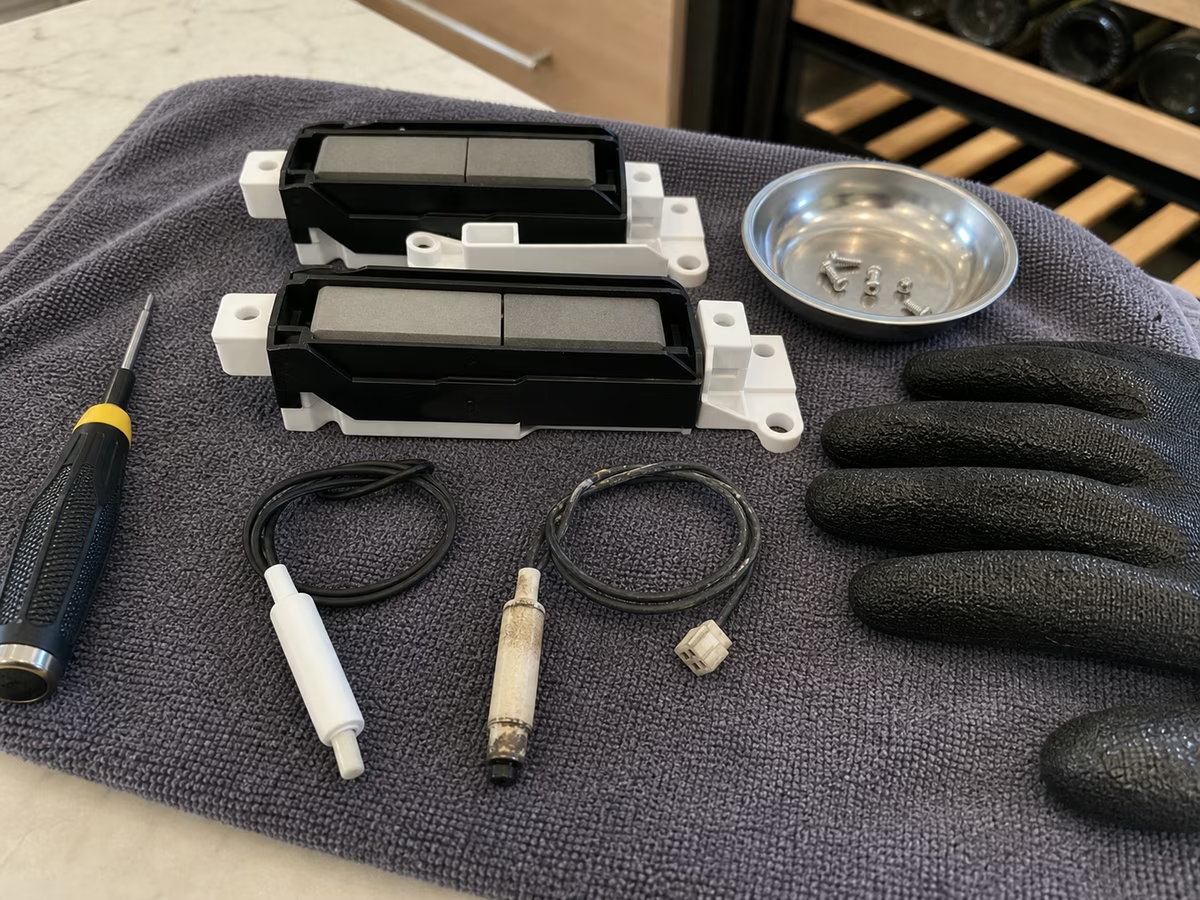
Symptom: steady offset in one zone. Diagnosis: probe vs. display. Part: OEM thermistor. Quote driver: which zone and model.
Have this ready
MODEL · ZONEThe model number and which zone is drifting let us bring the right thermistor or damper. Where to find it →
Specialty · wine columns & dual-zone cabinets
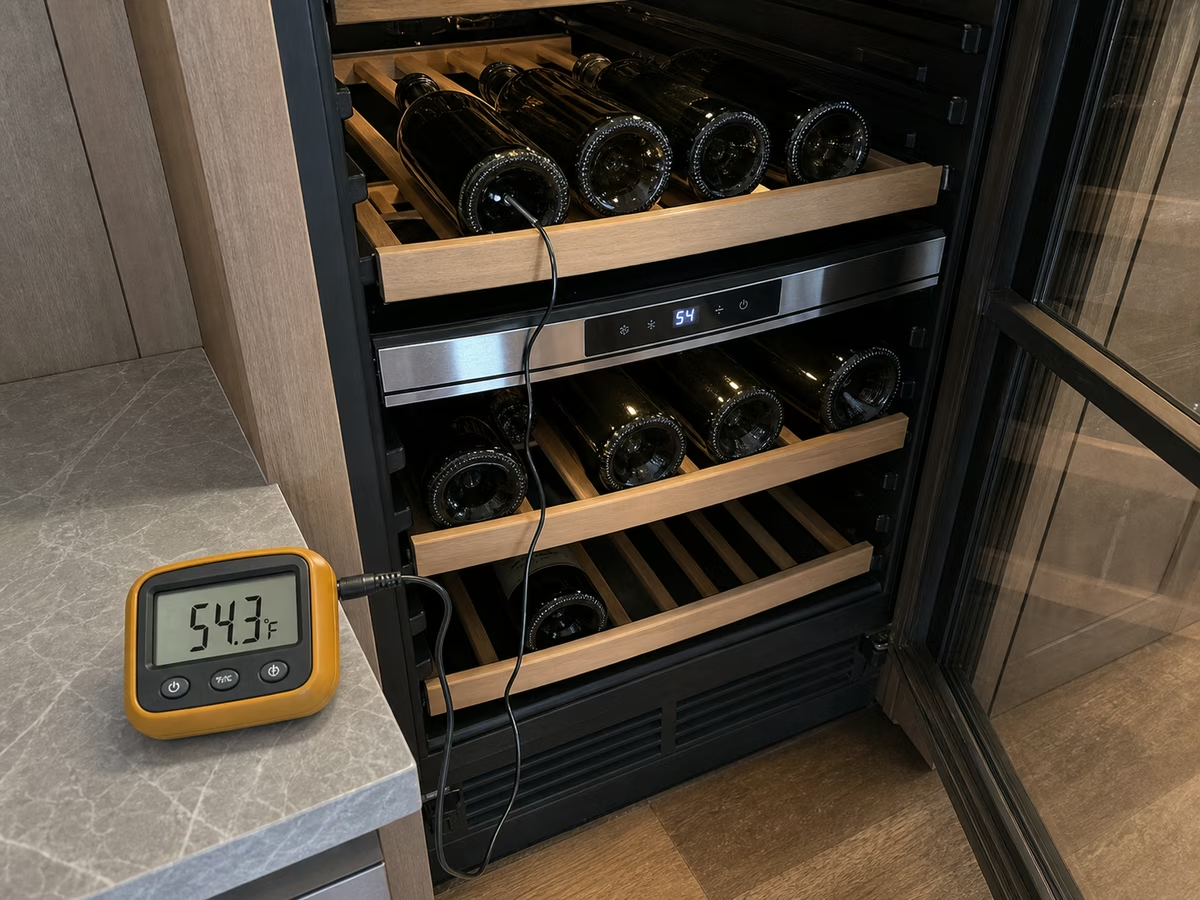
A dual-zone Sub-Zero wine cabinet drifting a few degrees in Mill Valley is usually a zone thermistor, damper or a compressed door seal, not the sealed system; Mill Valley Sub-Zero Repair confirms it with a logged probe over a full cycle in Corte Madera 94925. Tell us your model and zone at (415) 683-1487.
Along Throckmorton Avenue and up toward the homes near the Dipsea steps, Sub-Zero wine columns are a fixture of serious kitchens — and a few degrees of drift is the complaint we hear most. A lower zone reading 4° warm is not a write-off. On these cabinets it is far more often a sensor, a damper or a door seal than a failure of the cooling system itself.
Sometimes the unit also throws a control board, thermistor or display alarm that makes the drift look catastrophic. In plain terms: the board reports what a sensor tells it, and a bad sensor produces a bad report. What we cannot know before inspection is whether the alarm reflects a real cooling loss or a mis-reading — which is why we log a probe against the display over a full cycle before quoting a single part.
Quick answer
A Sub-Zero wine column drifting a few degrees is usually a thermistor, damper or seal — not the sealed system. We confirm with a logged probe before replacing anything, so a collection is never risked on a guess.
Why this is not a generic repair
A kitchen refrigerator can wander a couple of degrees and no one notices. A wine cabinet is engineered to hold a narrow band, often with separate zones, because the contents are sensitive and, in many Mill Valley homes, valuable. Sub-Zero builds these with dedicated sensors and dampers, which means the failure modes are specific — and so are the parts. Treating a wine column like a generic fridge is exactly how the wrong component gets replaced.
Five common failures
Symptom: steady offset in one zone. Diagnosis: probe vs. display. Part: OEM thermistor. Quote driver: which zone and model.
Symptom: one zone drifts while the other holds. Diagnosis: damper operation check. Part: damper assembly. Quote driver: access.
Symptom: drift near the door, condensation. Diagnosis: seal and hinge check. Part: gasket. Quote driver: panel-ready vs. standard.
Symptom: alarms, erratic readings. Diagnosis: board check by serial. Part: OEM board. Quote driver: model variant.
Symptom: both zones slowly warm. Diagnosis: coil and fan inspection. Part: clean or fan. Quote driver: corrosion from coastal air.
| Drift pattern | First test | Likely path |
|---|---|---|
| One zone steady high | Probe vs display and thermistor reading | Sensor or damper path |
| Both zones slow warm | Condenser airflow and cabinet heat | Airflow or fan path |
| Drift with condensation | Door seal and hinge alignment | Gasket or alignment path |
| Alarm plus drift | Code by serial and board/sensor test | Do not quote board from display alone |
Mill Valley price ranges
Mill Valley ranges for Sub-Zero wine columns and wine storage drifting off temperature. A few degrees of drift is usually a sensor, damper or seal — not the sealed system.
| Service / symptom | What is included | Price range | Time on site |
|---|---|---|---|
| Diagnostic visit + logged probe | Probe logged against the display over a full cycle, per-zone reading | $165–$245 | 45–90 min |
| Thermistor / temperature sensor (per zone) | Zone sensor test and OEM replacement | $280–$560 | 1–2 hr |
| Damper / air-baffle control | Zone airflow control test and damper replacement | $320–$640 | 1–2 hr |
| Door gasket / seal (per door) | Seal compression test and OEM gasket | $360–$760 | 1–2 hr |
| Dual-zone control board | Serial-matched board diagnosis and replacement | $430–$1,150 | 1–3 hr |
| Condenser clean + fan check | Coil clean and fan verification | $190–$420 | 1–2 hr |
What sets the final price: which zone is drifting, whether it is a thermistor, damper, seal or board, and whether one or both zones are affected.
Step by step
These owner checks tell us whether a Mill Valley wine cabinet drift is a sensor, a damper or a door seal before we quote.
Fast facts
Your decision, made easier
Near the Dipsea steps and the upper canyon lots, older homes sometimes run these columns in warmer, less-ventilated nooks, which nudges the condenser harder — worth mentioning when you call or book online so we plan airflow checks too. A fresh-food section warming elsewhere in the same kitchen, by the way, is a separate issue: see the not-cooling guide for that.
Reviews
Backed by our wider appliance repair network with 700+ customer reviews across platforms and a 4.9 average rating.
“Our 424 wine column lower zone had crept up to 58°F against a 55°F setpoint, which made me nervous about the whole collection. The tech in Strawberry logged a probe across a full cycle before touching a thing, then replaced the zone thermistor and a lazy damper. Holds setpoint now and nothing was risked on a hunch.”
— Vivian S., Strawberry 94941“Our dual-zone cabinet here in Mill Valley was drifting a few degrees and I was sure it meant a big sealed-system bill. It turned out to be a failing thermistor reporting wrong, not the cooling system at all. They replaced the sensor and documented every reading before and after.”
— Owen B., Mill Valley 94941“Our 427 wine unit in Corte Madera kept warming a few degrees and there was a little condensation around the door. Turned out the gasket had compressed over the years and was pulling in room air. A new OEM seal and a quick alignment, and it holds temperature again.”
— Helen V., Corte Madera 94925Tell us the model, the zone, and the reading. We’ll bring the likely thermistor or damper for your Sub-Zero line and confirm the drift with a logged probe before replacing anything.
Questions, answered for Mill Valley
Usually it is a thermistor, damper or door seal, not the sealed system. We confirm with a probe logged against the display over a full cycle before replacing any part, so a collection is never risked on a guess.
Only if a zone climbs well out of range and stays there. A few degrees of drift for a short time is rarely an emergency; log the displayed temperature and tell us the trend when you call or book online.
Dual-zone cabinets control each zone separately. A single-zone drift usually points to that zone’s sensor or damper, while both zones warming together suggests airflow or the condenser.
We stock the common thermistors and dampers and confirm the exact variant against your serial number before the visit when the model number and affected zone are available.
Foggy spells raise humidity and expose tired door seals, but a steady 3–5°F drift still warrants a logged probe. In Mill Valley the fix is usually a $280–$760 sensor, damper or gasket, not the sealed system.
Most wine-column work falls between $280 and $1,150 — a zone thermistor or damper at the low end, a dual-zone control board at the high end. A logged diagnosis ($165–$245, credited to the repair) tells us which.